

The Recombobulation Area is a 19-time 21-TIME! Milwaukee Press Club award-winning opinion column and online publication founded by Milwaukee journalist Dan Shafer.
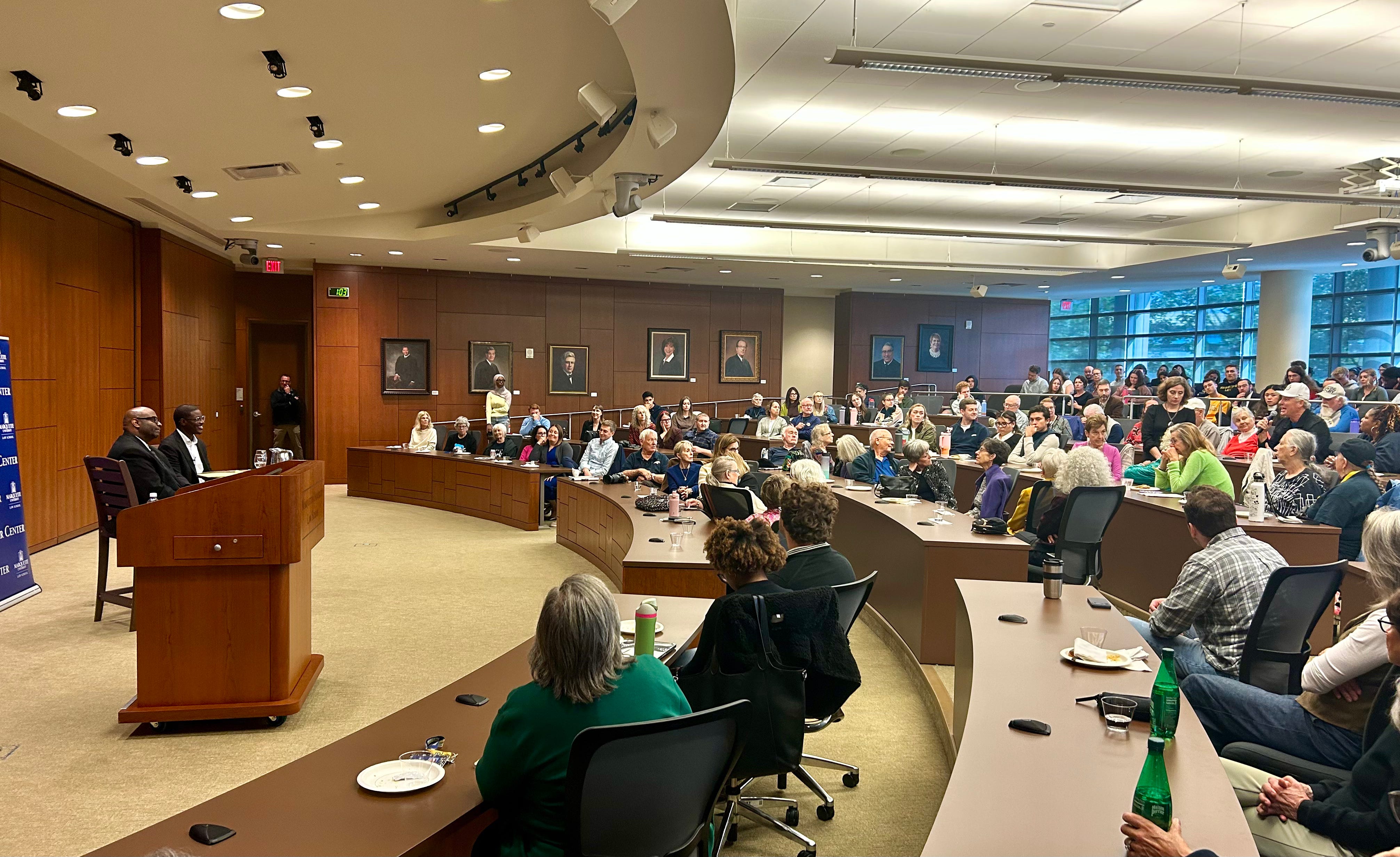
At Marquette University, David Crowley, the Milwaukee County Executive and Democratic nominee for governor, discussed his childhood and upbringing in Milwaukee, his rise in state and local politics, his come-from-behind victory in the chaotic August primary, and what he would seek to do if elected governor.
The conversation was part of the “Get To Know” series, which features one-hour conversations with candidates, hosted by Derek Mosley, former Milwaukee Municipal Court and the current director of Marquette Law School’s Lubar Center for Public Policy Research and Civic Education.
Mosley mentioned that all statewide candidates were invited to participate in this series, but Republican nominee, Congressman Tom Tiffany, “respectfully declined.”
The “Get To Know” events tend to be a bit more conversational than a typical interview, and Mosley discusses a candidate’s personal background along with their professional record and campaign plans.
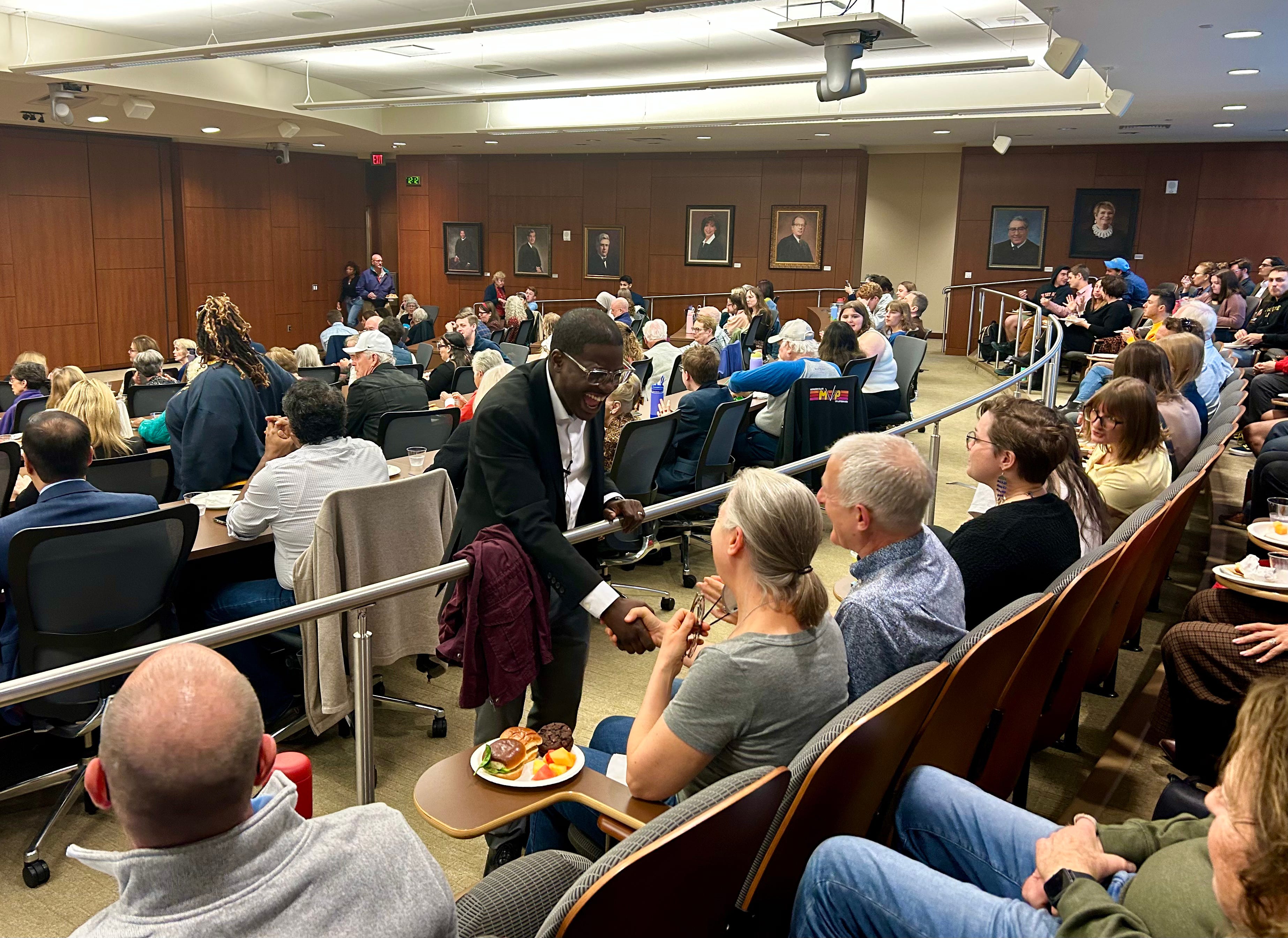
Crowley grew up in the city of Milwaukee. Both of his parents were also born and raised in Milwaukee, and his father was a master electrician and mother was a “Jane of all trades” who worked a variety of service industry jobs. The house he grew up in, located at 23rd Street and Burleigh Street, was purchased from the city for $1, he said.
But the family encountered challenges, as Crowley’s parents “(struggled) with mental health and drug addiction.” They split up and would later divorce, and Crowley first lived with his mother, where “We went with no lights, no gas, and no running water for a while,” he said.
Crowley talked about his mother, who passed away about three years ago, and said she was “the one who pushed me more than anyone” and was his “biggest cheerleader.” He recalled a story when, the day he was sworn in as County Executive, she told him he needed to go back to college — which he eventually did, graduating in December of 2024, delivering the commencement speech at the University of Wisconsin-Milwaukee that year.
He first became interested in politics when he was in high school and got involved with a youth development organization called Urban Underground. He said the organization’s co-founders, Reggie and Sharlen Moore, “literally saved my life.” At the age of 17, he said, he began to do community organizing around teen domestic violence — navigating questions like “what types of policies can be put in place at the local level to basically save people’s lives?”, he said.
Crowley initially planned to go into the Navy and was part of the ROTC program, but he eventually turned to politics. He got his start on Russ Feingold’s 2010 campaign for U.S. Senate, and then would go on to work as legislative staff member for Nikiya Harris Dodd, who served on the Milwaukee County Board and in the Wisconsin State Senate. He ran for Common Council in the 7th Aldermanic District in 2016 and lost, but would soon see an opening to run for State Assembly in the 17th District after then-State Rep. LaTonya Johnson ran for State Senate, and won.
“As a famous philosopher once said: ‘Do or do not. There is no try,’ and I decided that I was going to get back up and I was going to do it again,” he said, to which Mosley replied, “Did you just quote Yoda?” as laughs erupted in the room.
After being elected, Crowley soon became the chair of the Legislative Black Caucus and chair of the Milwaukee delegation. The first issue he got involved in, he said, was criminal justice.
“I had so many family members who had been in and out of the criminal justice system, and so I truly believe that we need reform,” he said. “One of the biggest hallmark pieces of legislation that I’m extremely proud of is that we were able to get the ball rolling to close Lincoln Hills and Copper Lake.”
He also talked about wanting to “(make) sure local units of government could get access to the resources it needs,” having familiarity with how the shared revenue formula created problems at the local level in Milwaukee County government.
“More importantly, I learned during that time that I needed to build relationships,” he said. “One of my favorite quotes — many of you have heard me say it many times – is that Teddy Roosevelt said, ‘No one cares what you know until they know how much you care.’”
Crowley decided to run for Milwaukee County Executive in 2019, after Chris Abele chose not to seek re-election in the spring 2020 race. A good friend, he said, told him “Your life story is Milwaukee County’s work,” referencing the county services his family and his mother relied on during times of struggle.
“I thought it was a great opportunity not only to make a difference for Milwaukee County, but a lot of people don’t know what county government is,” he said. “So I was able to use my experience to make connections on how Milwaukee County can be that safety net for those who absolutely need it.”
He became the first African American elected to the position, and, at 33 years old, the youngest Milwaukee County Executive in history. His election came at a time of crisis, in the early months of the COVID-19 pandemic.
“My predecessor, Chris Abele, called me the night that we found out that I won the race and said, ‘We need you to come in tomorrow.’ And I’m like, ‘I can’t even celebrate?’”, he joked. But it was clear he would need to get to work quickly at this moment of crisis.

The longer-term challenge for Milwaukee County from the very outset of his first term, Crowley said, was to “put Milwaukee County on a better financial path,” he said. “You can’t make investments in housing, in mental health, in transportation, in any of the programs and services that any of our residents rely on unless we fix the fiscal challenges that we were facing in Milwaukee County, and that’s what I set out to do.”
That “overarching goal,” Crowley said, led to the work that went into Act 12, the bipartisan 2023 law that restructured the state’s shared revenue system and allowed Milwaukee County to raise its sales tax to address those looming fiscal challenges that he inherited as County Executive.
While most see this as shared revenue reform, Crowley said, “It was actually pension reform in Milwaukee County,” referencing the pension scandal in the early 2000s and the long-term effects it has had.
“Getting that shared revenue deal done, that was a $3.2 billion reform for Milwaukee County,” he said. “You saved the pension for those who rely on that and work extremely hard, but we did a soft freeze, where now new hires go directly into the WRS (Wisconsin Retirement System). We’re going to be saving a lot more money long-term than people actually realize.”

Crowley mentioned a number of other accomplishments, such as in housing, where he touted having the lowest unsheltered homeless population per capita in the country, and building several affordable housing developments in suburban communities. He also talked about developing partnerships that helped “reduce the overdose deaths in Milwaukee County by about 40% in four years.”
He talked about the bipartisan Brewers’ stadium deal, saying “I’m the reason why the Brewers are still here in Milwaukee.” Crowley added that, through negotiations on that deal with the Republican-controlled legislature and Gov. Tony Evers on that bill, “Because of the deal that we did, throughout the 30 years of the deal, we are going to actually see about $280 million in flexible revenue coming back to Milwaukee County.”
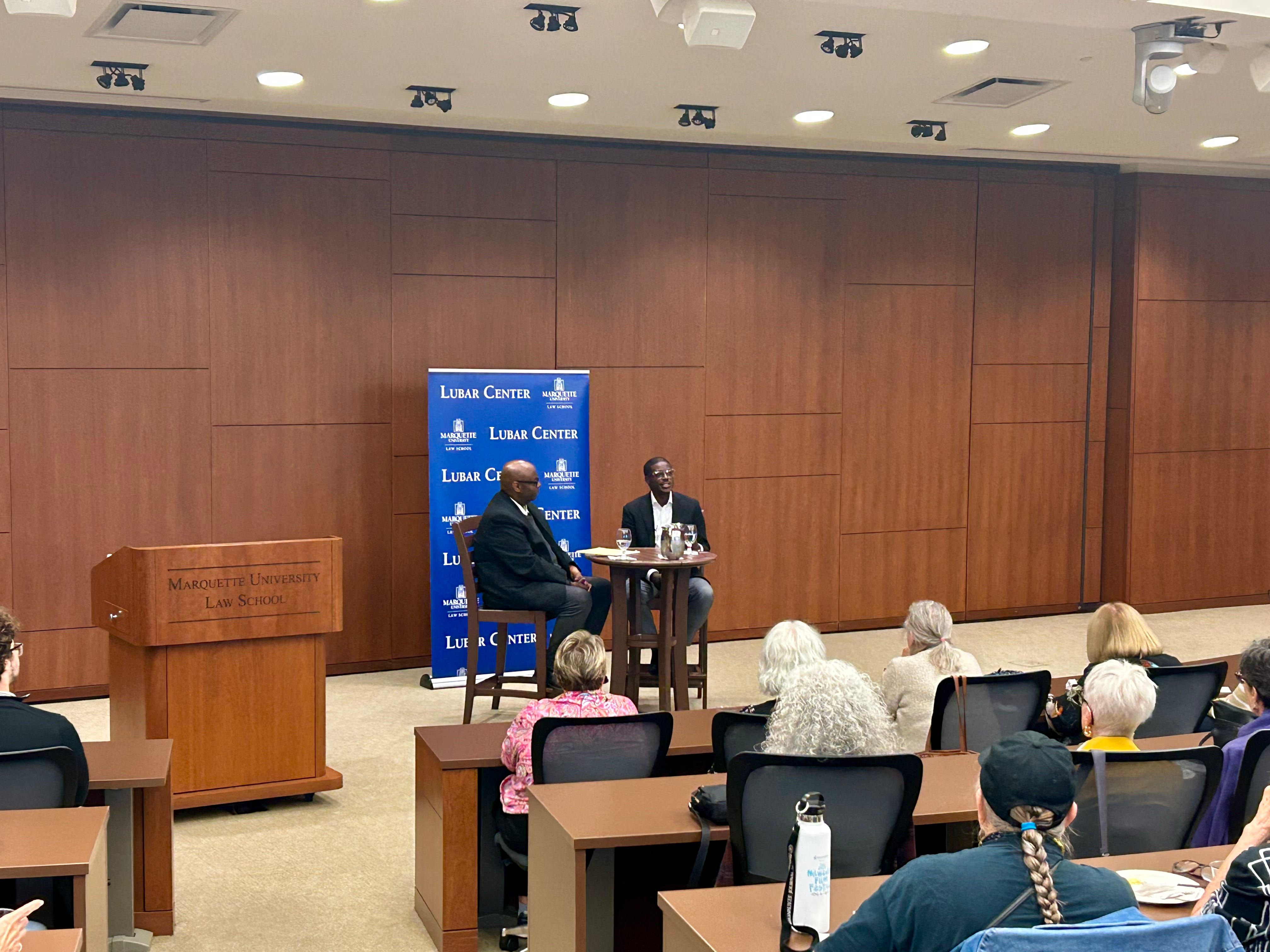
In the rest of the conversation, Crowley talked about the chaotic primary and his decision to drop out and then return to the race, his decision to run for governor, and his priorities if elected.
One of Mosley’s questions touched on the surplus deal that failed to pass earlier this year, and what Crowley would propose to do with that surplus. His answer focused on affordability and policies for families, such as public education and child care.
“The affordability crisis is not a hoax, it’s real,” he said. “So, we have to bring down costs for our families. We can utilize that budget surplus to invest in public education. That would help to bring down property taxes for every single person across the state. We have had to go to referendum after referendum to make sure our children have access to resources. And guess what? It’s still not enough.”
On child care, he said “parents and guardians shouldn’t have to be in the position” of deciding whether to go to work or to stay home to take care of their child.
Some of the surplus, he said, could be used to address “short-term fixes,” but he emphasized that a larger process would be needed to address long-term issues like the school funding formula and continued “flaws” in the state shared revenue formula.
But ultimately, he said, “Education is going to be the top priority that we’re going to be focusing on.”

Other issues discussed included Flock cameras (the County just removed them), data centers (“if communities don’t want a data center, they shouldn’t be forced to have a data center”), the minimum wage (“we need to raise it to $20 an hour”), and marijuana legalization, on which he called Wisconsin a “doughnut hole, because every (state) surrounding us actually has legalization.”
He also took audience questions ranging from uniting the party after a tough primary, engaging with young voters, reducing the prison population, managing challenges that come with the state’s aging population, the state’s brain drain problem , and more.
You can watch the full conversation here.

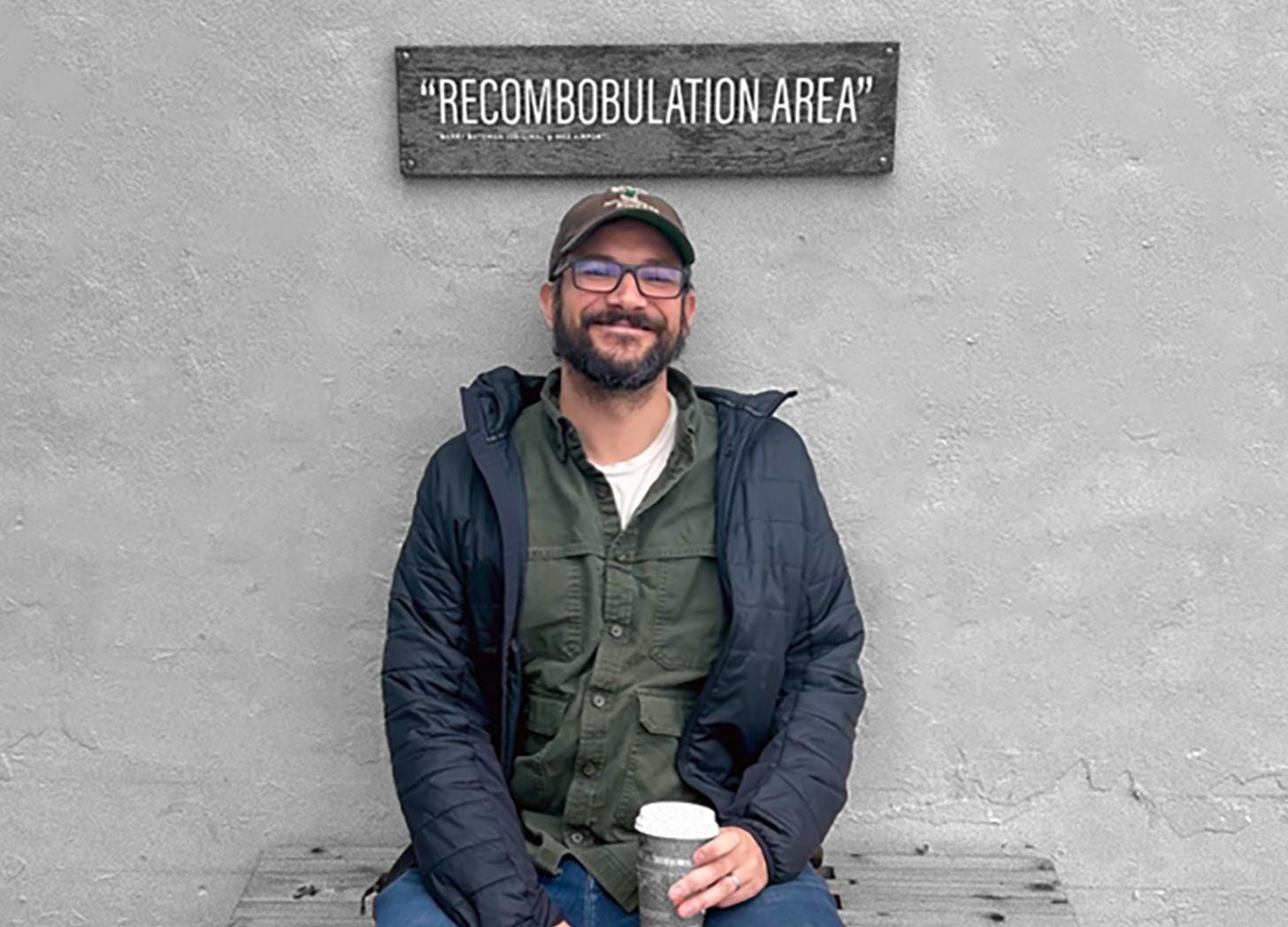
Dan Shafer is an independent journalist from Milwaukee who writes and publishes The Recombobulation Area. He worked with Civic Media from 2024 to 2026. He’s written for The New York Times, The Daily Beast, Heartland Signal, Belt Magazine, WisPolitics, and Milwaukee Record. He previously worked at Seattle Magazine, Seattle Business Magazine, the Milwaukee Business Journal, Milwaukee Magazine, and BizTimes Milwaukee. He’s won 24 Milwaukee Press Club Excellence in Journalism Awards. He’s on Twitter at @DanRShafer.
Subscribe to The Recombobulation newsletter here and follow us on Facebook and Instagram at @ therecombobulationarea.
Already subscribe? Get a gift subscription for a friend.
Part of a group who might want to subscribe together? Get a group subscription for 30% off!
Follow Dan Shafer on Twitter at @DanRShafer, at BlueSky at @danshafer.bsky.social, and on Threads at @danshafer.