

The Recombobulation Area is a 19-time 21-TIME! Milwaukee Press Club award-winning opinion column and online publication founded by Milwaukee journalist Dan Shafer.
This is a special longform feature story by Dan Shafer at The Recombobulation Area.
Previous pre-election feature stories have included “Bird on a Wire” in 2022 and “Joy and Desperation in the Fox Valley” in 2024, both of which won awards for “Best Long Hard Feature Story” from the Milwaukee Press Club.
This full feature story will be first available for paid subscribers only,
but will soon be available to all.
Subscribe to The Recombobulation Area to support our
award-winning independent journalism.
There’s a certain simplicity to Rebecca Cooke’s approach — to her campaign, to her politics, to, seemingly, her worldview. This is not a criticism. This is a good thing.
Cooke is the Democratic candidate running for Congress in Wisconsin’s 3rd Congressional District, located largely in western Wisconsin. It’s the state’s second-largest district in terms of land area, and on this crisp, sunny Saturday in October, she’s covering a lot of ground. Her day begins in Eau Claire, where she attends the Hmong New Year celebration; later, she attends a lutefisk dinner at a rural church in the village of Ferryville in rural Crawford County; and she ends her day in La Crosse at the County Democratic Party’s fall dinner.
In between, she hosts a cookout for supporters in the city of Viroqua, located in the Driftless region. At Eckhart Park, a few dozen supporters gather not just to pick up new campaign signs and literature, but to build relationships with one another — and this is an intentional part of Cooke’s campaign, and something she’s been doing since she first ran for this seat in 2022. It’s not just about campaigning and the goal in front of them, it’s also about building community. There’s a participatory element to Cooke’s campaign that you can see in this kind of setting. It gives people “confidence and togetherness,” Cooke says, along with “a little bit of extra time to talk to me, to see each other.”


The group sits down at park benches, bratwursts and paper plates in front of each of them, and Cooke gets up to speak under the park pavilion. She talks about health care; she talks about tariffs; she talks about transmission lines and data centers; she talks about the war in Iran. On each issue, she outlines a direct connection to something happening in the 3rd Congressional District. She talks about her five-point platform — “lowering costs, combatting corruption, bolstering agriculture, supporting small business, and rebuilding an American dream we can actually grasp.” She also talks about candy bars.
“So, I have these 3 Musketeers in my hand,” she says.
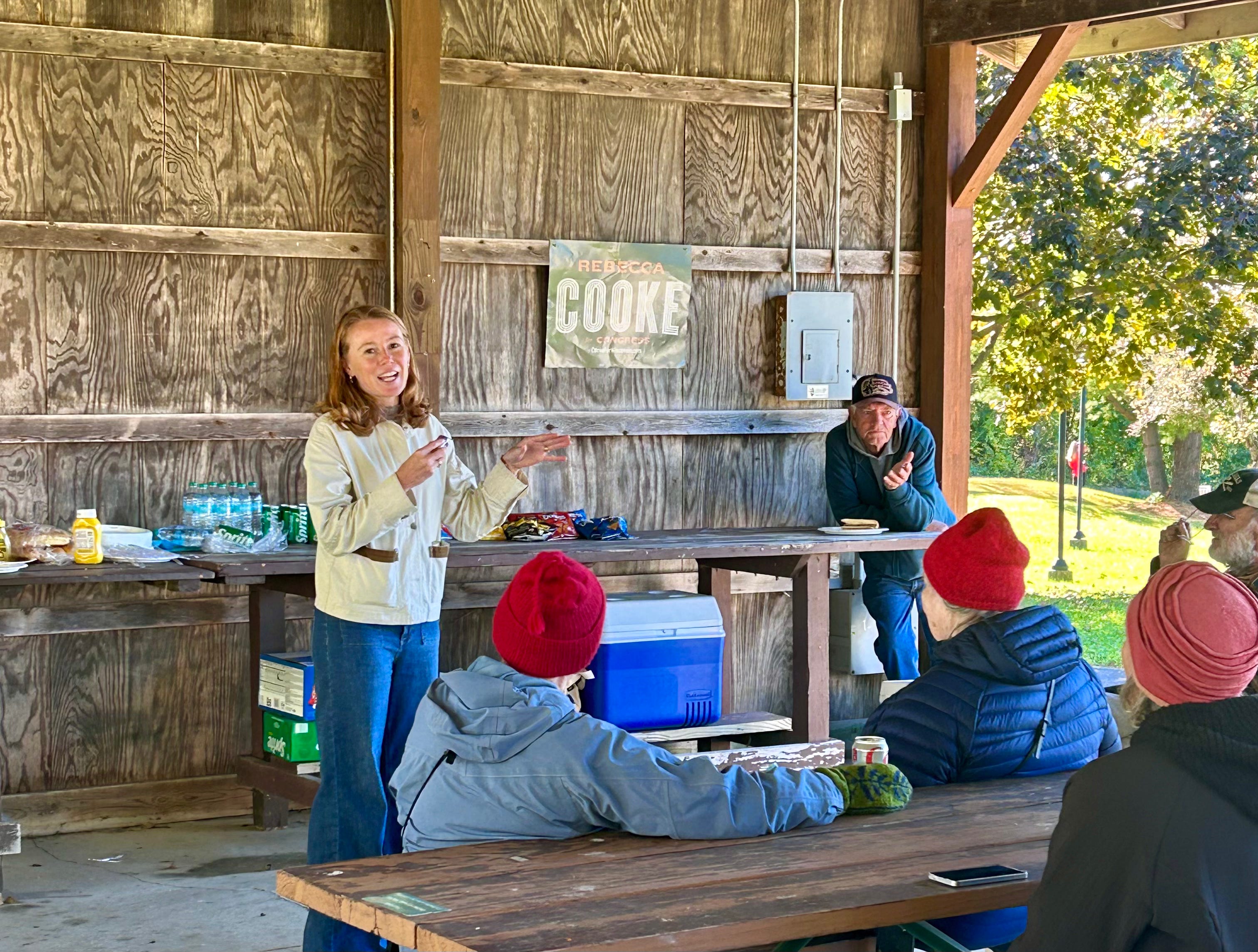
She gestures to a man named Rick, who is there for the cookout, but isn’t among those wearing Cooke T-shirts or hats like many in the rest of the group. This is someone Cooke met while campaigning, door-to-door. Cooke had gone to his house when out canvassing and recounts the first conversation they had.
“We were talking just about how things are going, right?” she said. “He was talking to me about how much he loves 3 Musketeers and how every time he goes to Walmart, it just gets more expensive. His story really stuck with me, just thinking about how costs really impact people…It’s a lot harder to enjoy things.”
After the primary, Cooke looked up Rick’s address and mailed him a package of 3 Musketeers bars. “It was just kind of something I wanted to send him to brighten his day,” she said, adding that this wasn’t something she ever intended to be part of the campaign, adding, “I was raised to do good things when no one’s watching.” But, at this cookout event, Rick showed up with a few of those candy bars to share with Cooke and with the group. In his own charming, unexpectedly roundabout way, he’d become part of that community that Cooke has been building.
“It’s those small interactions that mean the difference in winning elections — showing up and listening to people,” she said to the group before they go out for an afternoon of campaigning. “You don’t need to mail people 3 Musketeers bars, but it’s those sorts of conversations.”
“People just want to be heard right now.”
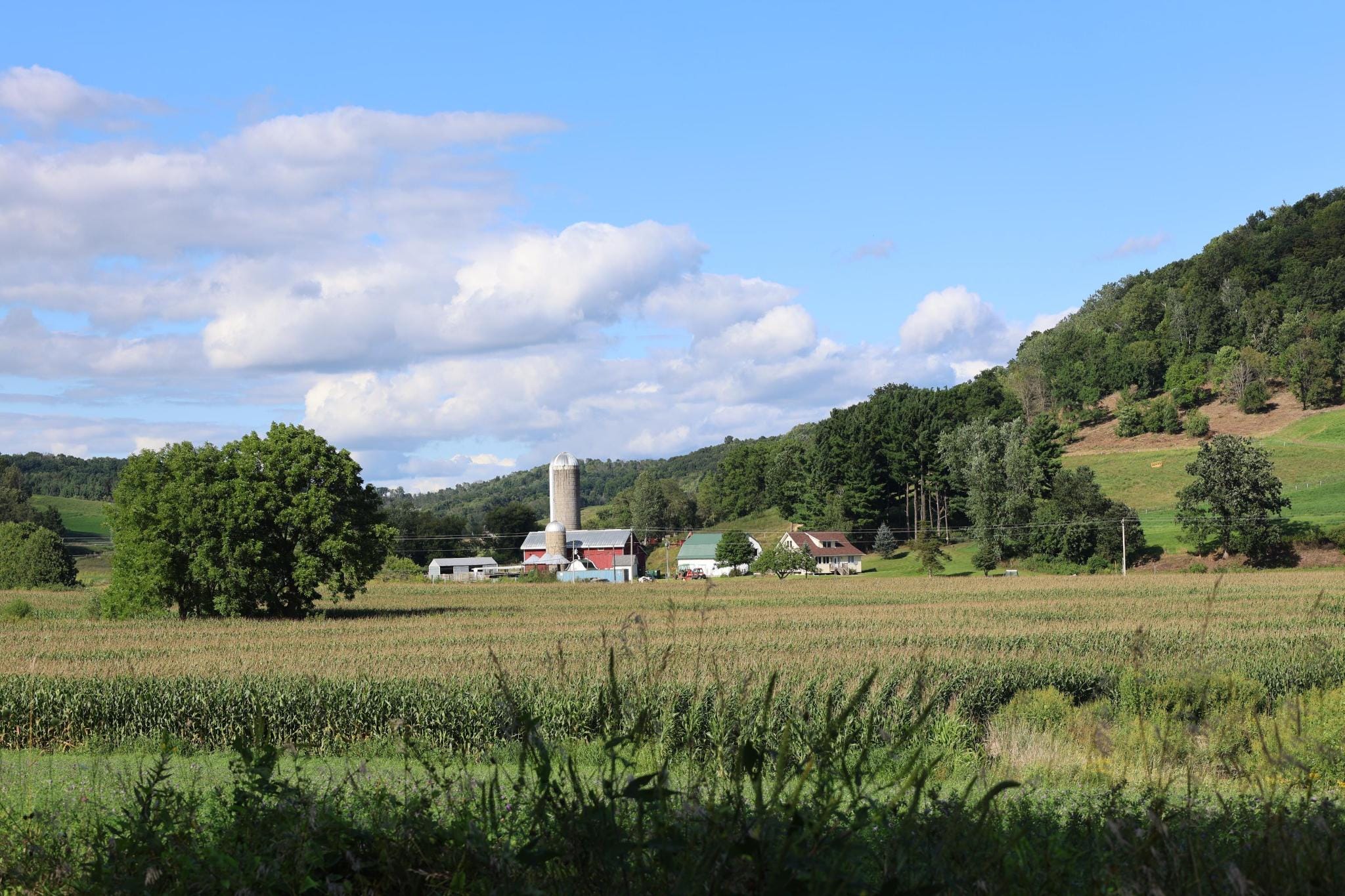
The 3rd is Wisconsin’s most competitive congressional district, and the only to change partisan hands within the last 15 years. Democrat Ron Kind served there for 13 consecutive terms from 1997 to 2023. When he retired, Republican Derrick Van Orden won the race for the open seat in 2022.
This has, in many ways, been ground zero for the political realignment that has occurred in the era when Donald Trump has become the dominant figure in American politics. This district is home to more counties that voted for Barack Obama in 2008 and 2012 and then voted for Donald Trump in 2016 than all but one1 in the entire country. This is Obama-Trump central.
Even viewed through a nationwide lens, where many places experienced this Obama-Trump phenomenon, there is a distinct cluster of these counties in the Driftless region, which spans western Wisconsin, eastern Minnesota, northwestern Illinois, and northeastern Iowa, with the Mississippi River cutting through it. This region gets its unique topography — rolling hills, bluffs and ridges, winding rivers — from the fact that, unlike much of the rest of the Midwest, this region was never flattened by a glacier.
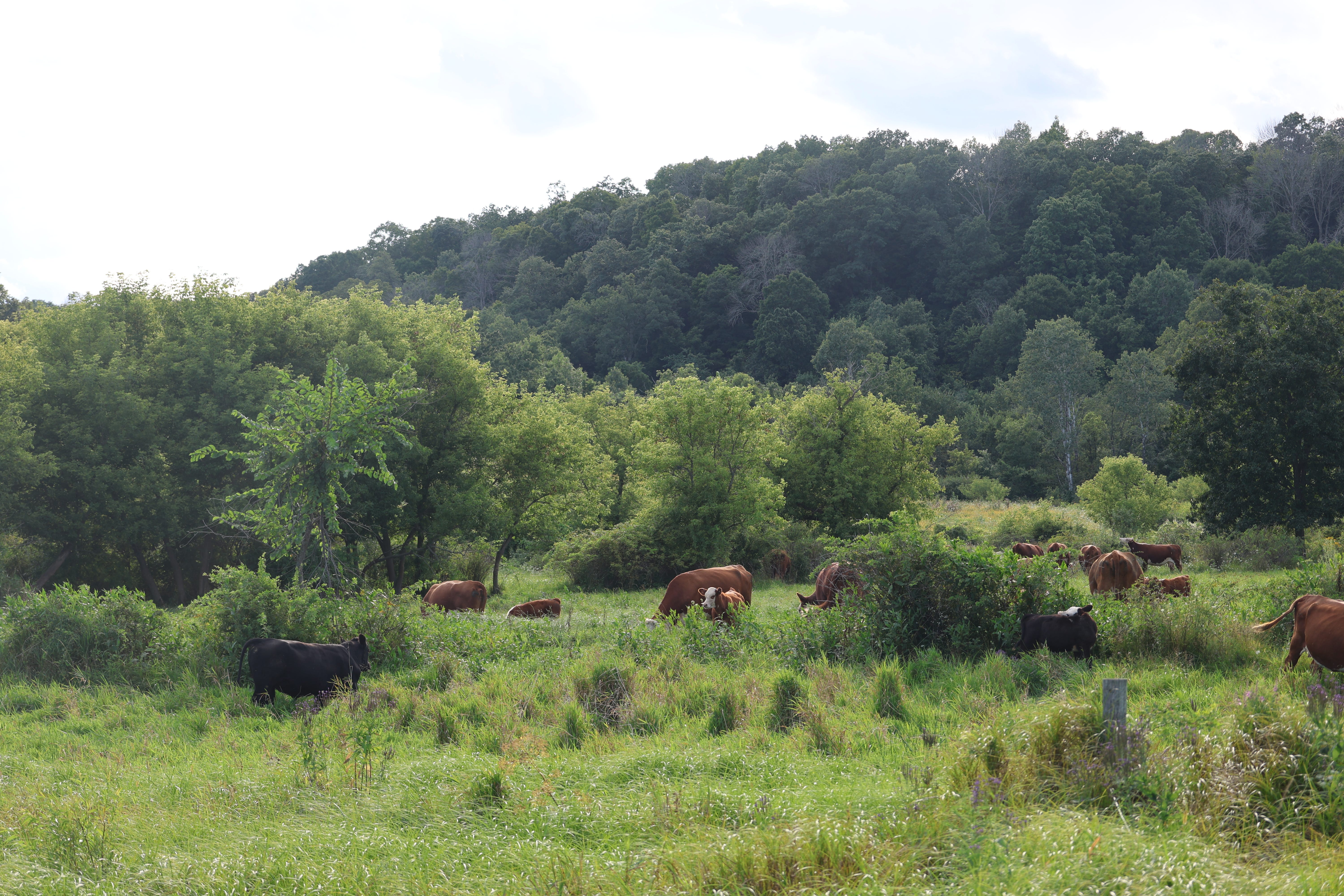
This unique geographical region also contains its own unique politics, too. There’s an independent streak, a distinct anti-establishment energy, and a myriad of economic challenges that have contributed to this dynamic. This all seemed so perplexing a decade ago when it first occurred, but is less so now as this realignment has come to define much of our politics in the years since.
Some of the trends in this region have been especially stark. Vernon County, for example — home to Viroqua, where Cooke held that cookout and traded a few candy bars — swung from a county that Barack Obama won by a 22-point margin in 2008 to one Donald Trump won by more than 4% in 2016. In neighboring Crawford County — a more rural part of the region where Cooke would attend a lutefisk lunch in a church basement — a 27-point advantage for Obama in 2008 turned to a nearly 14-point advantage for Trump in 2024. Democrats’ efforts to claw back what they’d lost have not yet proven successful.
And if 2016 served as a stunning result for many who did not see the Obama-Trump realignment materializing, it was the 2024 presidential election that drove home how much these political changes were no fluke. Western Wisconsin, and in particular, the Driftless region in the southwest corner of the state, was in many ways the area of the state that delivered Wisconsin for Trump a second time.
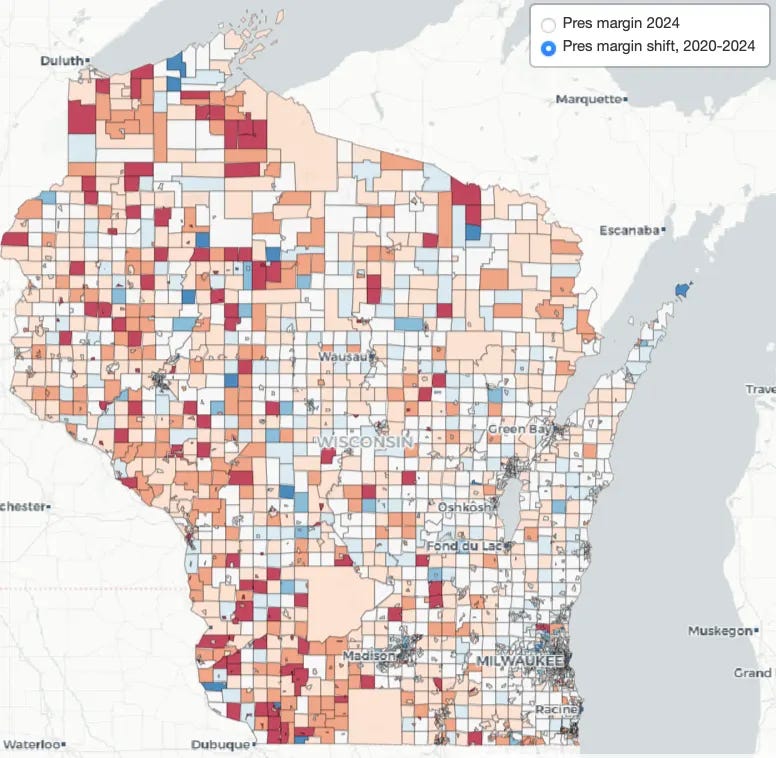
Realignment’s right hook had struck again. Four of the five counties that shifted most toward Trump from 2020 to 2024 were all clustered in the southwest corner of the state — Lafayette (6.5-point shift), Iowa (6.1-point shift), Crawford (5.9-point shift) and Grant (5.9-point shift). With Wisconsin turning out to be the closest of any of the seven swing states in 2024, these shifts in a state decided by less than 1% in many ways proved decisive. Madison and Dane County continue to be a reliable Democratic powerhouse, Milwaukee’s numbers didn’t drop off the way many other major cities in the Great Lakes did, and the Fox Valley and Green Bay held serve, with only minor rightward shifts. But if there was any “red wave” in 2024, it crested in the Driftless.
But now, after nearly two years of Trump’s return to office with promises unfulfilled and no end in sight to a worsening affordability crisis that’s fallen especially hard on this region, it seems as if the arc of that Obama-Trump realignment story is reaching a certain final chapter in these midterms. The part of the state home to more Obama-Trump counties than any other is now left frustrated and exhausted and sometimes downright angry midway through Trump’s second term. A prevailing “what now?” sentiment seems to be emerging in a region continually searching for its next way forward.
This frustration and exhaustion and anger is not just materializing as a response to the president, but up and down the ticket, from Cooke’s challenge against ultra-MAGA Congressman Derrick Van Orden through the governor’s race, where Congressman Tom Tiffany, a staunch Trump ally, is the Republican nominee, through the downballot Senate and Assembly races, too — many of which Cooke has gotten directly involved with.

Voters here can make a profound impact on politics. The 50-50 nature of this region means that any one individual casting a ballot can have an outsized impact. These choices reverberate statewide and nationwide, as votes here could go a long way toward determining the future of everything from control of the U.S. House of Representatives to the governor’s mansion to the state legislature.
There are voters in this area who will be casting ballots in a toss-up Assembly seat that’s within a toss-up state Senate district that’s within a toss-up congressional district that’s in the nation’s most closely-contested swing state. For example: In the city of Darlington, the county seat of Lafayette County, voters will be casting ballots within a toss-up Assembly district (the 51st), a toss-up Senate district (the 17th), a toss-up congressional district (the 3rd) in what is perhaps the most evenly-divided purple state in the country. Apply some Moneyball-style analytics to the value of a vote here, and you might find these to be some of the most consequential votes cast just about anywhere.
The story of the 2026 election in Wisconsin is not just one of a Trump midterm. For state level politics, it is an everything-on-the-line, fork-in-the-road moment. This features the first open race for governor in 16 years, when Scott Walker won and ushered in an era of Republican dominance of state politics for much of the 2010s. In the state legislature, this will be the first election to be held in full since gerrymandered maps that overwhelmingly benefitted Republicans, in place from 2012 to 2023, were ruled unconstitutional and new maps were drawn. This is the first realistic opportunity for Democrats in Wisconsin to win a trifecta — control of the Senate, Assembly and the governorship — in a generation.
And up and down the ticket, so much for what’s ahead is riding on votes that will be cast in western Wisconsin.
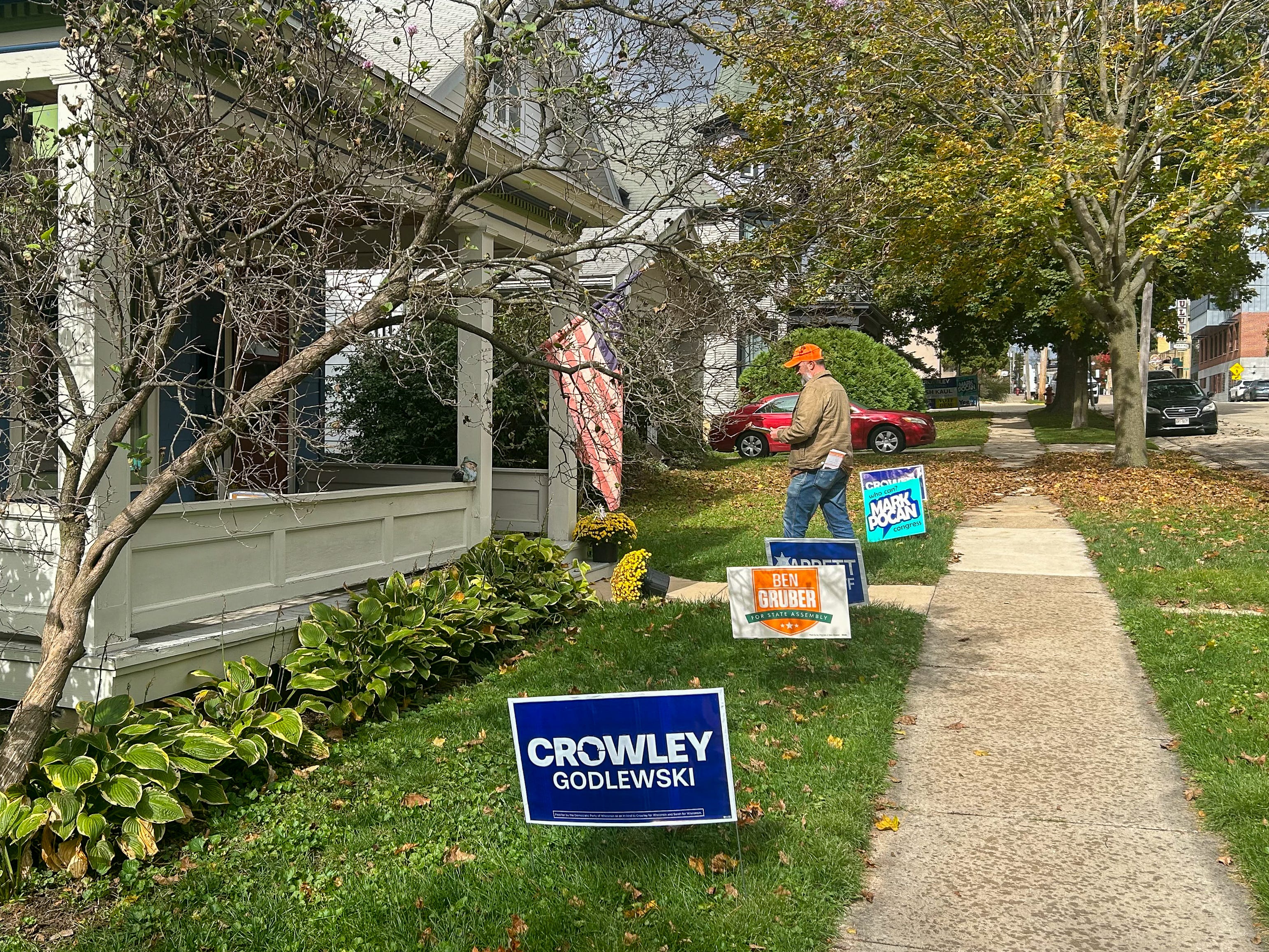
For years, the 51st Assembly District has been one of the most competitive in the state of Wisconsin. Republican incumbent Todd Novak has represented the district since winning in 2014, and he’s won five of six elections by a margin of less than 5%. Even as Kamala Harris carried the district by more than 3% and Tammy Baldwin by nearly 7% in 2024, Novak won re-election by a more than three-point margin — a testament to the independent streak of the region, and, perhaps, of Democrats’ struggles to compete in more red-trending rural districts in the southwest part of the state. But now, Novak is up against someone who might be his toughest challenge yet — conservation warden Ben Gruber.
In the charming downtown of the western Dane County village of Mount Horeb, Gruber can’t seem to walk a few steps or sit at a table for a few minutes without someone coming up to him, talking about his campaign, saying they’ll vote for him. Gruber’s campaign has been in the spotlight as one of the toss-up seats on the map as Democrats seek to flip the Assembly for the first time in 16 years.
“Our campaign has gotten attention, no doubt,” he said. “My anonymity is gone.”
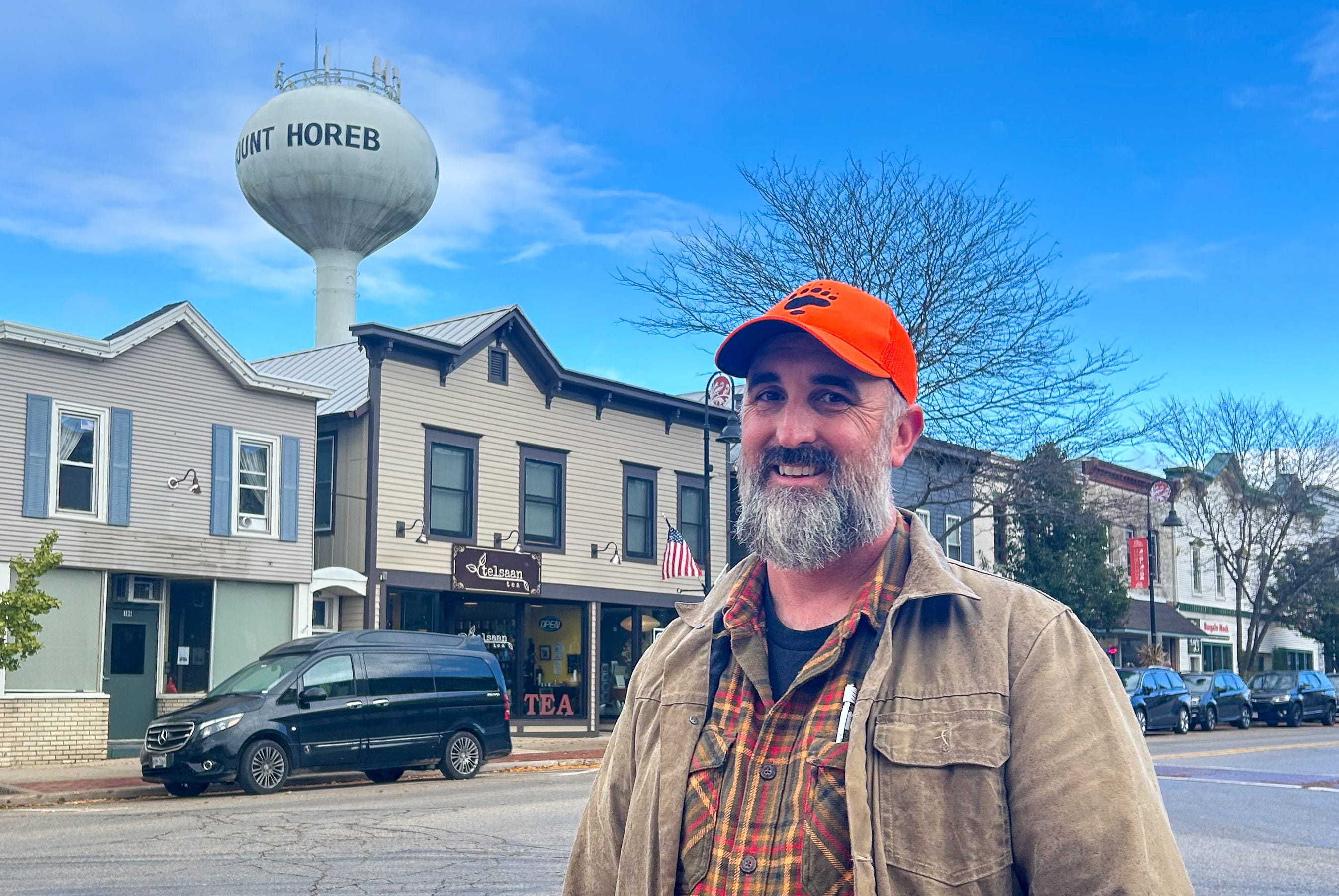
Gruber is tall, with a long gray-black beard, walks with long strides, and has a certain presence to him. He has served as a conservation warden with the Department of Natural Resources and has worked in local police, fire and EMS, volunteering in his home community of the village of Arena, and working for 20 years as a paramedic. He’s seen up close, though, how his district and the public services within it that people rely on continue to hollow out. In 2018, the elementary school in Arena closed for good.
Gruber moved back to the house he grew up in, in Arena, in 2019. No local elementary school meant “97 minutes on the bus” for his five-year-old to get to kindergarten at the closest public school, he said. He shares a story from years later illustrating how, piece by piece, the services people rely on have continued to disintegrate, devolve, and disappear entirely.
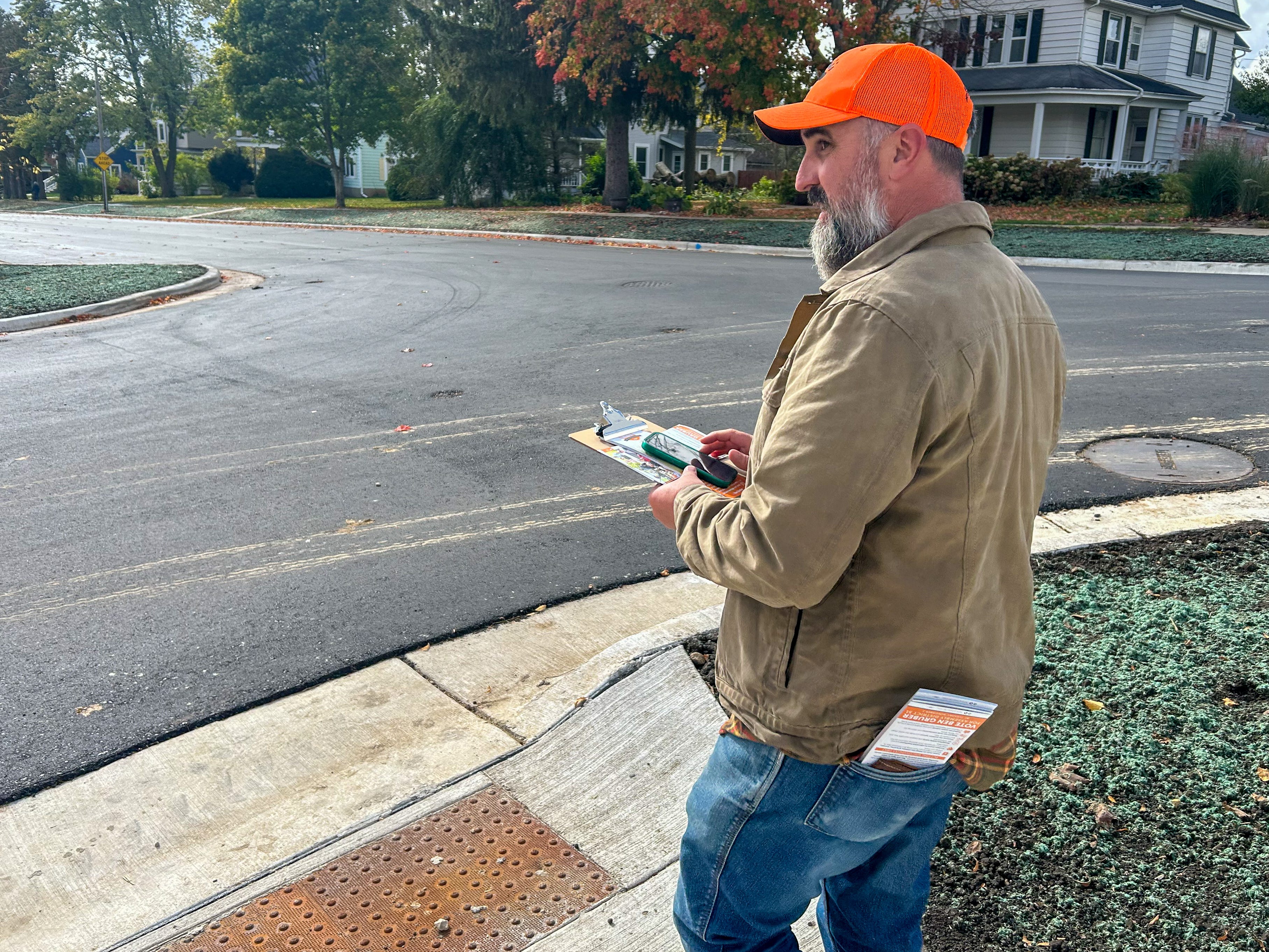
In 2024, working as a game warden, Gruber said, he got an emergency call about a woman who had stopped breathing. He’s able to respond, and, along with a local police officer, administered CPR for nearly a half hour, waiting for an ambulance from the next county over — “Not because ours was gone on another call, because ours was sitting in the station with no volunteers available that day,” he said.
“The people that I volunteered with on that ambulance, 20 years ago, were local school employees,” said Gruber. “There were just real pillars of our communities (who) had the ability to show up and volunteer. So, when our school closed, it meant a long bus ride for many kids, not just mine. But it also meant that our small rural town, which had been struggling with the loss of family farms for generations, all of a sudden, when that school left it was — in the words of the Packers announcers — it was the dagger. It was the dagger for the community.”
Three months later, Gruber would join the village of Arena police officer who he administered CPR with to accept an award for saving the woman’s life. But it wasn’t an entirely celebratory occasion.
He explains, “That was the very same night that our village effectively closed its police department forever. Because they didn’t have the funding. They were forced to choose between water to flush the toilets or public safety. That is what motivated me to run (for office).”
Closures like these have become a persistent problem in the region, Gruber explains. The village of Ridgeway closed its elementary school in 2020, and closed their police department to instead contract with the County department. He tells of school and police department and EMS closures in nearby towns like Mazomanie, Black Earth, Lone Rock and the Village of Plain.
“These are all within 20 miles of me,” he said. “They all no longer have their own police departments. They are struggling to pay their bills. So, that’s what happens.”
He pins the blame not on these local communities themselves, but on the state legislature and leaders like Novak and the area’s state Senator, Republican Howard Marklein.
“Their record is one of failure,” he said.
While Gruber, running as a Democrat but not necessarily identifying as one, is blaming these longtime elected Republicans, the broader frustration in the region more broadly is one pinned on both parties — a feeling of being “forgotten” in rural America, Gruber said, “regardless of who has power.”
“Every election feels like a change election here,” he said. “Every election feels like people just want something different. And when they say different, I think they mean effective. And it feels like they’re just not getting it. Swinging back and forth from election to election, trying to find something to effectively change the path rural Wisconsin is on — where we watch our family farms due to corporate consolidation, where we watch our rural schools, which are the center of our communities, close their doors…I think there’s a lot of people disaffected with politics in Madison and D.C., in both parties.”
Being disappointed and disaffected is one thing, Gruber adds, but in 2026, “Disappointment and disaffection has changed to anger. People are angry right now — in a way that I haven’t seen or felt.”
What are they angry about?
“I think the biggest thing is people feel lied to,” he said. “People who voted for Donald Trump feel absolutely lied to. They were promised no new wars and lower gas. And, you know, we’ve heard it all. But just the blatant corruption that is the complete opposite of what they were promised if they voted for Donald Trump.”
This anger isn’t just for Trump, it’s cascading downballot, he adds, in a way that has “really ripped the mask off of our state politics,” Gruber said.
“It’s helped people to see and recognize that the Republican legislature and our incumbents in this district, Todd Novak and Howard Marklein, have been in control of the levers of power in this state for a decade and a half,” he said. “And they have overseen all of these things we’re talking about — corporate consolidation of farms, high gas prices, healthcare that’s impossible to afford, consolidation of our schools, and closing of our police departments, and an ability to staff our ambulances.”
There’s anger, and there’s exhaustion, too, Gruber adds. And that part of it isn’t just about the last decade of politics under Trump — it stretches back to the first term under former governor Scott Walker and a Republican trifecta from the prior decade, as well.
“In retrospect, it feels to me like what happened in 2010 through 2014 felt like the test run for Project 2025 and what we’re seeing at the federal level,” he said. “So, there are a lot of people across the country watching what happens at the federal government right now who are shocked and exhausted and angry. I think we’ve been dealing with it here for 15 years longer than everybody else.”
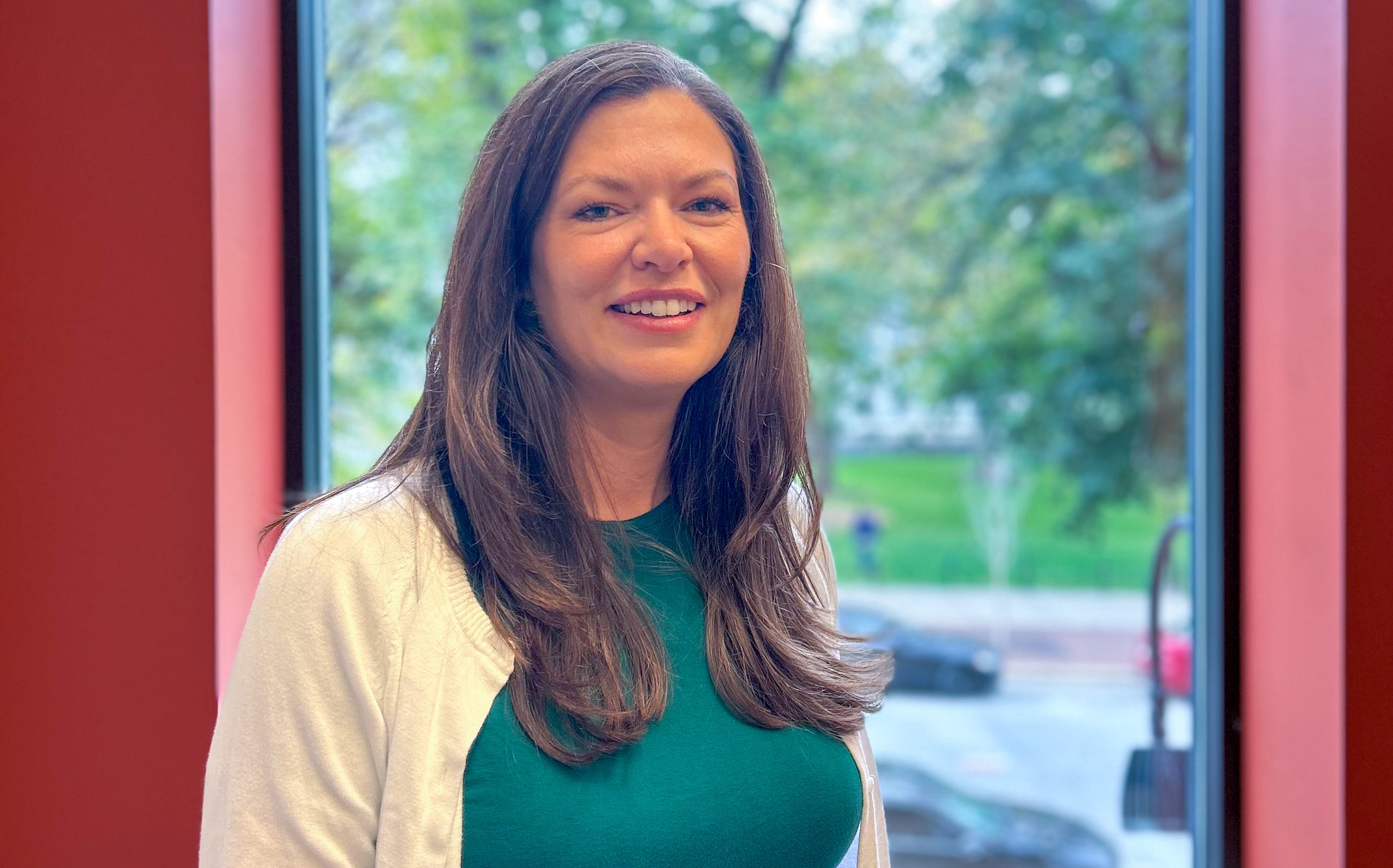
Up the ticket from Gruber, running in a 50-50 State Senate district, is Jenna Jacobson, a second-term state representative, who is challenging Marklein in District 17. Like Novak, Marklein has served in the state legislature for more than a decade, typically out-performing the top of the ticket.
This year, though, is the first time he’ll be on the ballot under new maps. For more than a decade, the Wisconsin State Legislature was home to one of the worst gerrymanders anywhere in the nation, giving Republicans a better chance at a two-thirds supermajority than Democrats had for a simple majority — in this otherwise 50-50 state. Liberal-aligned candidates won a string of state Supreme Court races between 2018 and 2023 to flip the balance of power on the court, which invited fresh legal challenges to those maps, and they were ruled unconstitutional in December of 2023. Gov. Tony Evers signed new maps into law in early 2024, and new maps were on the ballot for the 2024 election. But because state senators serve four-year terms, only half of the chamber was on the ballot — those in even-numbered districts would be up in 2024, odd-numbered districts in 2026.
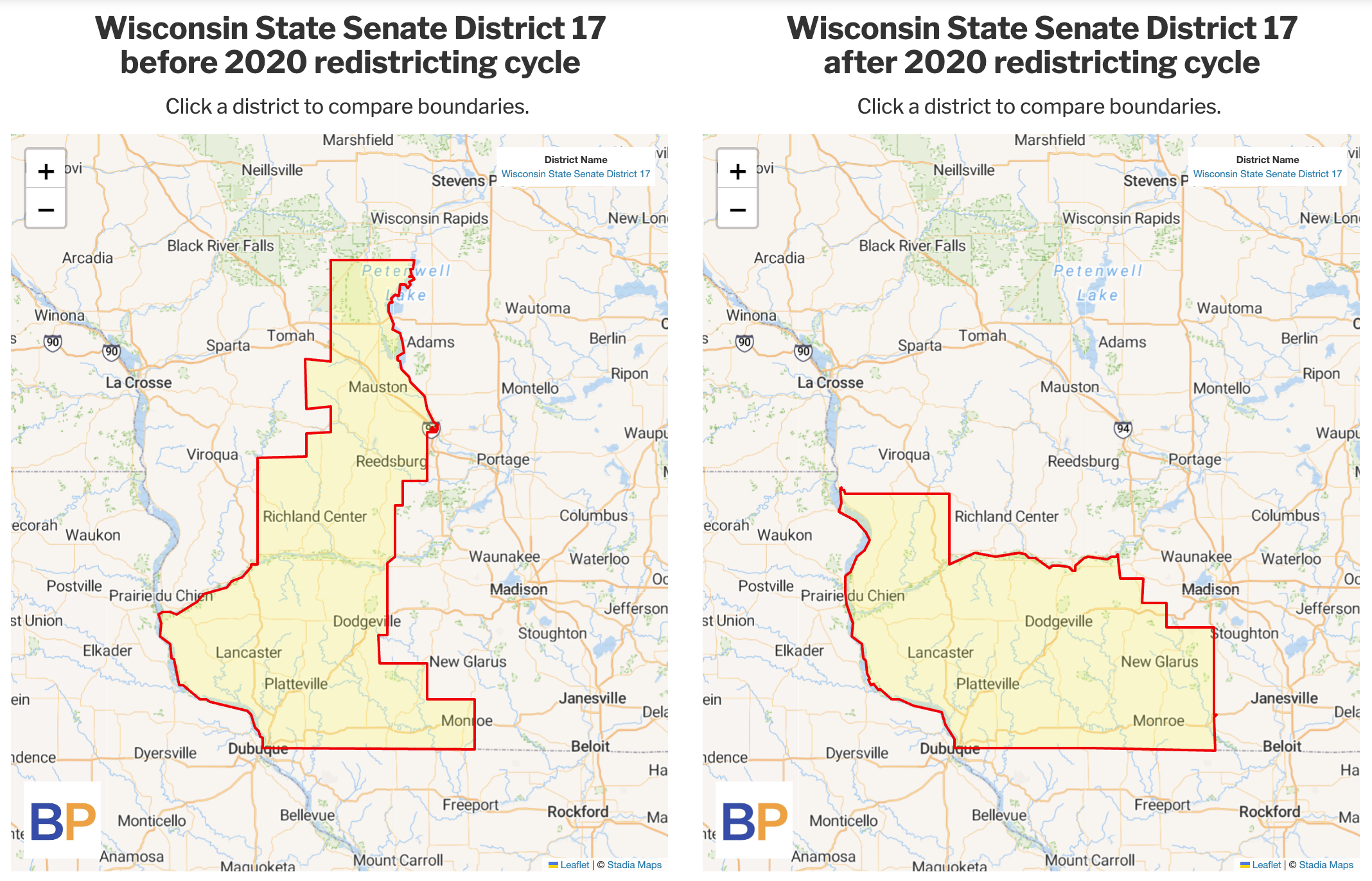
With those changes, Senate District 17 is now more cohesively positioned in the state’s southwest corner, and has also become more competitive. In 2022, under old maps, Marklein won re-election here by a more than 20-point margin. In the last presidential election, even as much of the region swung toward Republicans by several percentage points, Kamala Harris still carried this district by about a 1% margin, and U.S. Senator Tammy Baldwin by a nearly 5% margin. Months later, in the 2025 state Supreme Court contest between liberal-aligned candidate Susan Crawford and right-wing candidate Brad Schimel — a campaign famously dominated by the outsized influence of Elon Musk — Crawford carried the 17th by an 18-point margin.
Those results came right as the state budget process was playing out, and Marklein has a central role in that process as the Co-Chair of the state’s powerful Joint Committee on Finance, the committee where the state’s nearly $115 billion biennial budget is crafted.
“I was hoping, under these fairer maps, that our representatives are going to be more responsive to their constituents,” said Jacobson, not part of the budget committee, but part of the process in the Assembly. “I was thinking: now, we’ll have a purple budget. We’ll have something that is more reflective of what I was hearing, not just in my Assembly district, but around the state. And I felt like Howard (Marklein) didn’t do that. It felt like he was still prioritizing his party politics, his personal politics, and not representing the district. And so, I decided it was time to send him home.”
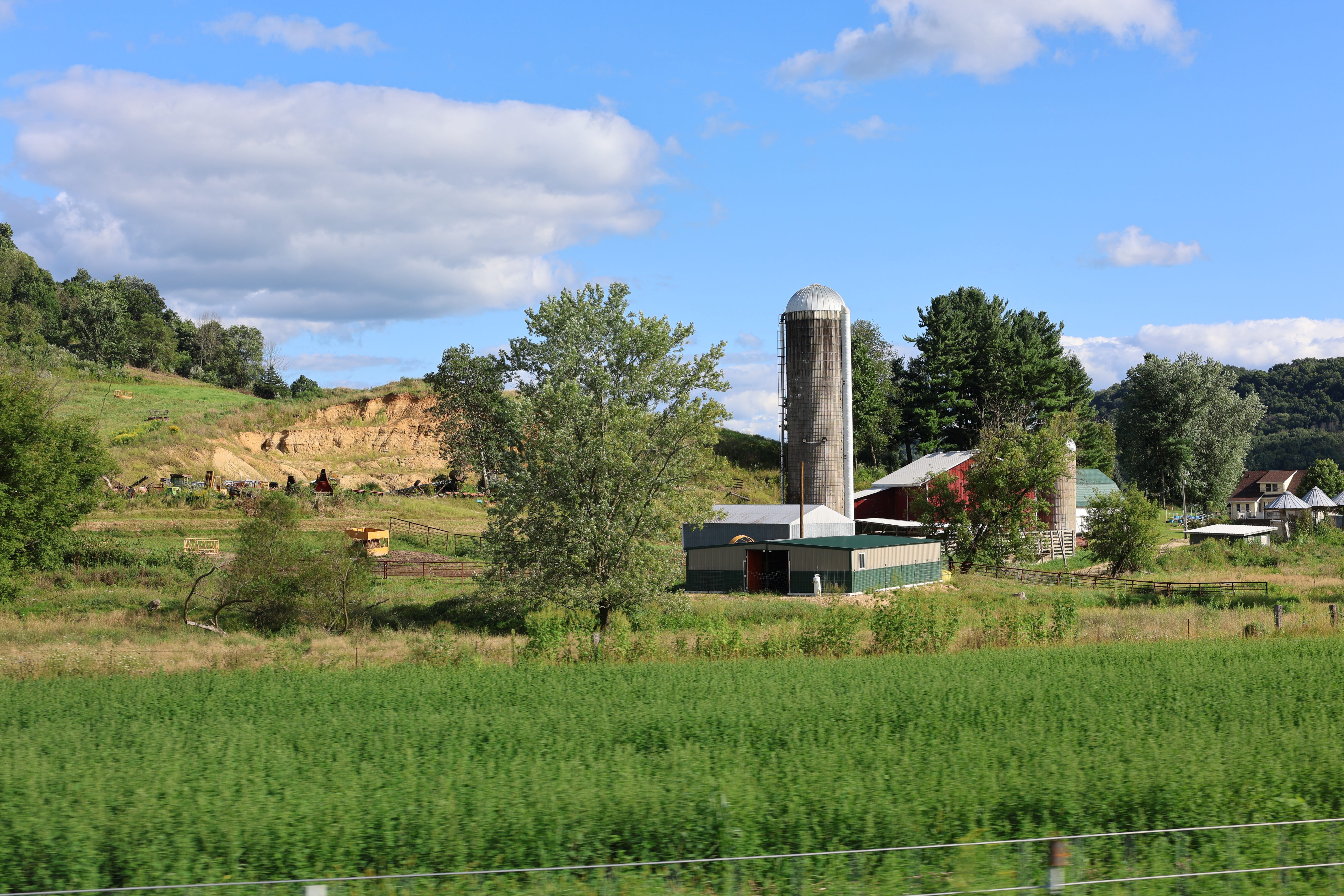
Much of the terrain in this district is especially rural, but rural in a different way than much of Wisconsin — fewer flat plains, more rolling hills. The Wisconsin River winds through the district and joins with the Mississippi that serves as the state’s western border. There are long stretches of state highway running through the 17th where you can go miles and miles without seeing any gas stations or places to stop, only winding roads — stunningly beautiful in the Wisconsin autumn, but stark in how relatively uninhabited and isolated it feels from every place else.
In Wisconsin, three Assembly districts2 make up every Senate district3, and Jenna Jacobson currently serves in Assembly District 50, the eastern portion of the Senate district. She launched her campaign early, in July 2025, and has made it a priority to knock on as many doors as possible in her effort to flip the district and introduce herself to its constituents — which can mean a two-hour drive from one side of the district to another. Since January, she said, her campaign has knocked on more than 40,000 doors.
She echoes a similar refrain that so many are seeing in this part of the state — “People are frustrated. They’re angry. They don’t feel like the things that are happening in the (state) Capitol are filtering down to them…They’re feeling that their property taxes are going up, that their groceries (prices) are going up, that they can’t afford to put gas in their car, and they’re not seeing anything happening at the state level to help them. And that frustrates them.”
Jacobson, though, remains optimistic.
“(People) are feeling very frustrated and maybe a little despondent about the state of politics,” she said. “But when I start talking to them about some of the things that are out there, some of the things we can be doing, I’m not going to say they get hopeful, but you start seeing that better as possible. And they start kind of feeling that — oh, we could be doing more. It’s not just a matter of, well, the government sucks and we’re never going to get things done. Perhaps the issue is that we need the right people in place. That, if nothing else, is giving people that glimmer of excitement that, yes, your vote still matters and your voice still matters and you should be getting out there and using it all the time.”


Around western Wisconsin, there is a common sentiment that neither of the two parties have been able to truly deliver for this part of the state — from the rural family farms to the small and mid-size towns that dot the region. Hating both parties can be a default political position in swingy regions of Wisconsin like this one. It’s often the case in the Fox Valley, too — another part of the state with a distinct independent streak that manifests itself in election results. Wisconsin is not as simple as Milwaukee and Madison on one side, the rest of the state on the other. This place contains multitudes.
But now, in 2026, many are souring on Trump, are frustrated and angry with Republicans, and are struggling in this economy, and much of this is being felt across the political spectrum. At the same time, though, it’s not as if people have suddenly come to love the Democratic Party.
The Democratic Party’s favorability rating in Wisconsin dropped to a net minus-28 shortly after the 2024 election, according to the Marquette University Law School Poll, and simply has never rebounded. The September poll showed a net minus-21 favorability rating for the party.
Some of that is just a product of polarization and the 50-50 nature of our politics — neither party has had a net positive rating in the past two years. Other factors contribute, too, from internal liberal frustration over the national party’s response to Trump’s second term to certain intraparty ideological disagreements to the longer-term trends that have driven realignment and led to Trump’s Republican Party performing better with non-college, working class constituencies. Some individual Democrats have some of the better favorability marks among politicians polled, like Tony Evers, who polls fairly consistently the most popular politician in the state, but overall, the Democratic Party’s brand remains especially bad in the state of Wisconsin.
So, will those who supported Trump in the past, but have turned on him by this point in his second term — who are struggling with rising costs, angry about corruption and the Epstein files and forever wars, on down the list — actually going to cross the aisle and vote for a Democrat?
“That is the million-dollar question, right?,” said Jacobson.
I asked that question over and over again to people in western Wisconsin, and based on the answers, this is clearly where larger uncertainty lies in this election. This may be what determines the outcome of this fork-in-the-road election for Wisconsin.
Some say that there are many who will simply just not vote. Some think there might be some degree of ticket-splitting, between a Republican gubernatorial candidate in Congressman Tom Tiffany who has voted with Trump 100% of the time, and some of the more familiar names they know downballot. But this time around? There are some who might actually vote for the Democratic candidate on the ballot. Candidates from all over expressed hearing feedback from voters, be it out canvassing door-to-door, or at events in the community, that typical Republican voters are saying they’ll be backing Democratic candidates up and down the ballot this time — with greater and greater frequency, the closer we get to the Nov. 3 election.
Gruber said there’s been multiple times in recent weeks where people have come up to him to say they usually lean Republican, but are voting “straight ticket Democrat this year.” Gruber doesn’t even consider himself to be a Democrat himself, but instead an independent who has voted for Republicans in the past, but now finds himself more aligned with the values of the Democratic Party. That might serve as a template, of sorts, for many western Wisconsin voters this year.
“I’m a father; I’m a husband; I’m a game warden, but I’m not a Democrat, and I never was Republican, but I was a functional Republican voter — and a functional Democratic voter now,” he said. “Maybe someday I’ll call myself a Democrat, but before that happens, we’re going to have to effectively and efficiently make life better for people here in rural Wisconsin.”
That’s part of the test at hand for Democrats, too. Even as the wind might be at their back in this election, creating something that sustains is going to require a different type of action if this year’s crop of Democratic candidates are elected.
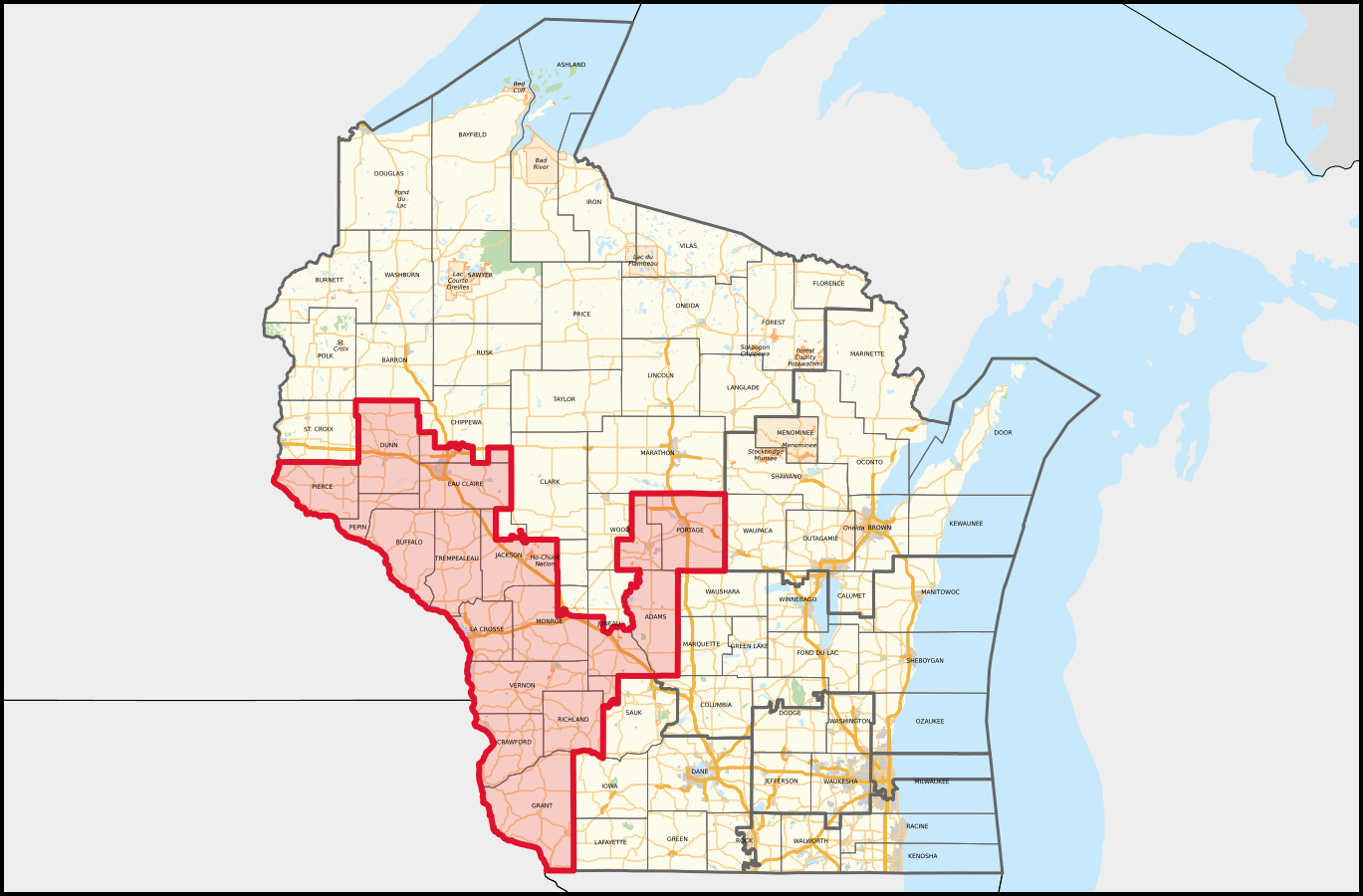
Because eight years ago, during the last Trump backlash midterm, Wisconsin Democrats did quite well. Democratic candidates swept races for every state office holder —Governor, Attorney General, Secretary of State, State Treasurer — and Tammy Baldwin won a nearly 11-point landslide in re-election for U.S. Senate. Each of these candidates won a majority in the 3rd Congressional District in 2018, too.
However, in eight statewide fall elections since then, the district went for the Republican seven times. Tony Evers’ one-point edge there in 2022 was the only time a Democratic candidate carried the 3rd district in a statewide race from 2020 to 2024. Democratic support has eroded, election after election, and Trump winning the district by an eight-point margin in 2024 made it seem as if the days of Obama — or any Democrat — winning double-digit margins in the district would be firmly a thing of the past.
But here’s another side of the realignment story happening, too. It used to be that lower propensity voters — those who might only show up in a presidential year, and might not vote in local elections, spring elections, or even midterms — would tend to lean Democratic. Now, they lean Republican, or might only show up when Trump is on the ballot. These higher-turnout elections now favor the GOP — as evidenced by Trump’s 2024 win that was the highest vote total in Wisconsin’s history.
Inevitably, there are going to be a few hundred thousand people who voted in a presidential election year who will not vote in a midterm. The other side of the coin for this era’s political realignment means that the more reliable, every-election voters are now far more likely to be voting for Democrats.
But many on the Democratic side are hopeful that whatever is happening now is more than just this moment, a midterm electorate, and an anti-Republican national environment that’s changing in the region. Perhaps there’s some that point to a new path forward that cuts through the Obama-Trump whiplash, Democrats’ cultural-issue quagmires, and MAGA’s second-term disintegration amid more forever wars, blatant corruption, and rising costs. And if a bottom is to fall out of any MAGA support, it will need to happen here — in western Wisconsin.
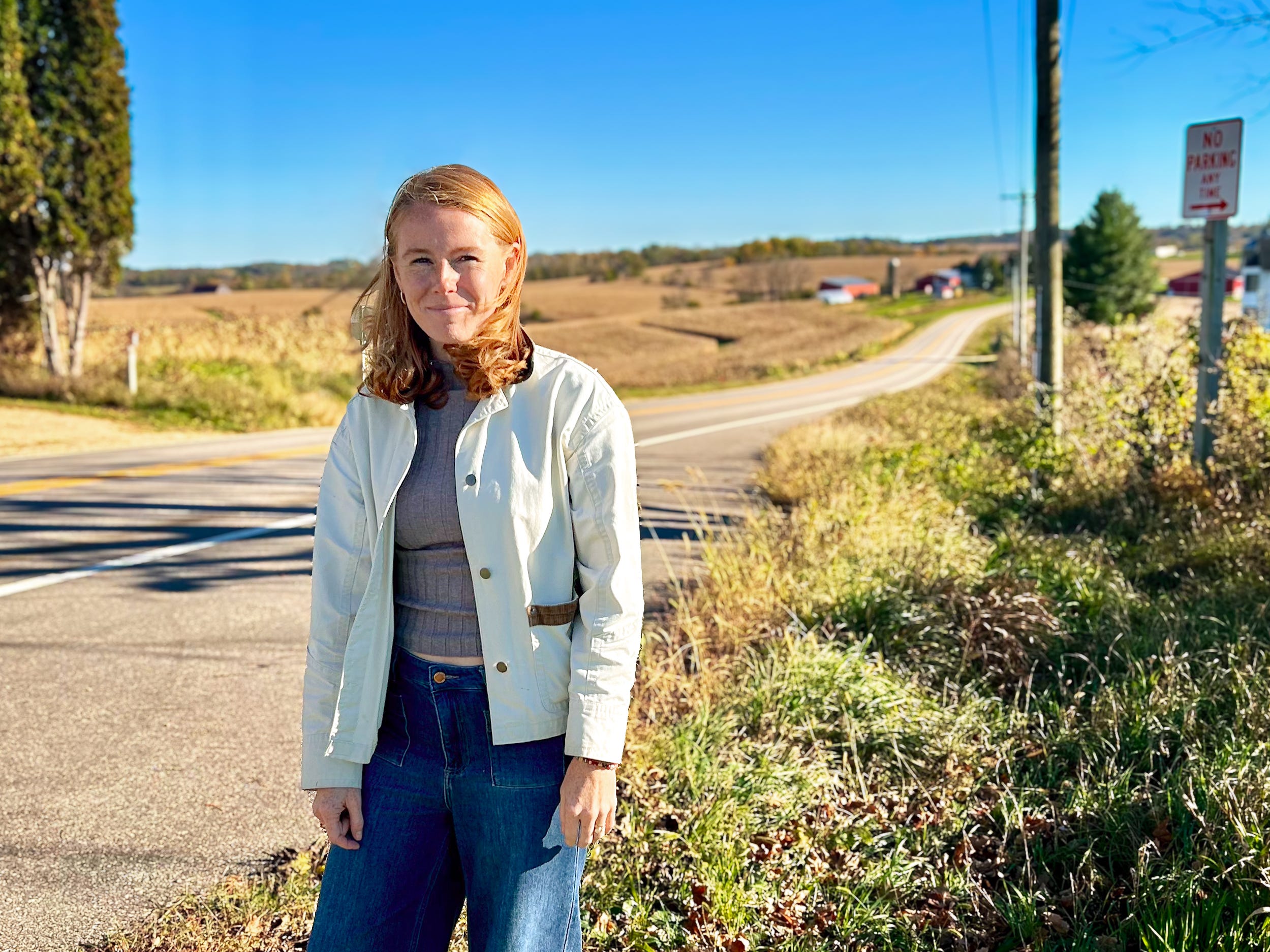
There’s a word that Rebecca Cooke that stands out to me, as we sit down for an interview after her campaign cookout — durable.
We’re talking about the recent run of beltway media stories talking about the “Bernie dogs” — Democratic candidates who have been endorsed by both Bernie Sanders and the Blue Dog Democrats — “I was the first one, so I wasn’t joining a club,” she notes. But there is a sense to this type of candidate emerging that points to a more durable coalition for Democrats, one that includes a democratic socialist independent like Sanders — Cooke is quick to point out that Sanders is an independent, and that she, like him, would be willing to buck the party when the moment calls for it — and the more moderate faction of Blue Dogs, that historically have favored fiscal responsibility and advocated for a strong national defense policies.
Cooke has talked about wanting a bigger tent for Democrats, and this “Bernie dog” approach could be a way to point a new way forward under the bigger tent with fewer intraparty litmus tests that compromise the ability to get things done. She bemoans the fact that Democrats did not pass the pro-labor PRO (Protecting the Right to Organize) Act when it could have, and drops a few four-letter words about not having enough pro-labor Democrats’ to pass such a “no brainer” of a bill.
“People lose the plot when they go to D.C.,” she said. “They forget who actually put them there. And I think that building a sort of durable coalition that’s willing to stand up to special interests, that’s willing to pass pro-worker and pro-labor policy, that’s willing to enforce antitrust law, I think that’s the sort of coalition that’s really going to benefit working-class Americans.”
That durable coalition, she suggests, might be less about ideology, but more about getting things done — more about actual, tangible results. She says there was some “complacency” in the past that just won’t fly anymore.
“The Democratic base won’t allow for politics as usual,” she said. “There are some real things that we need to do if we win the House back.”
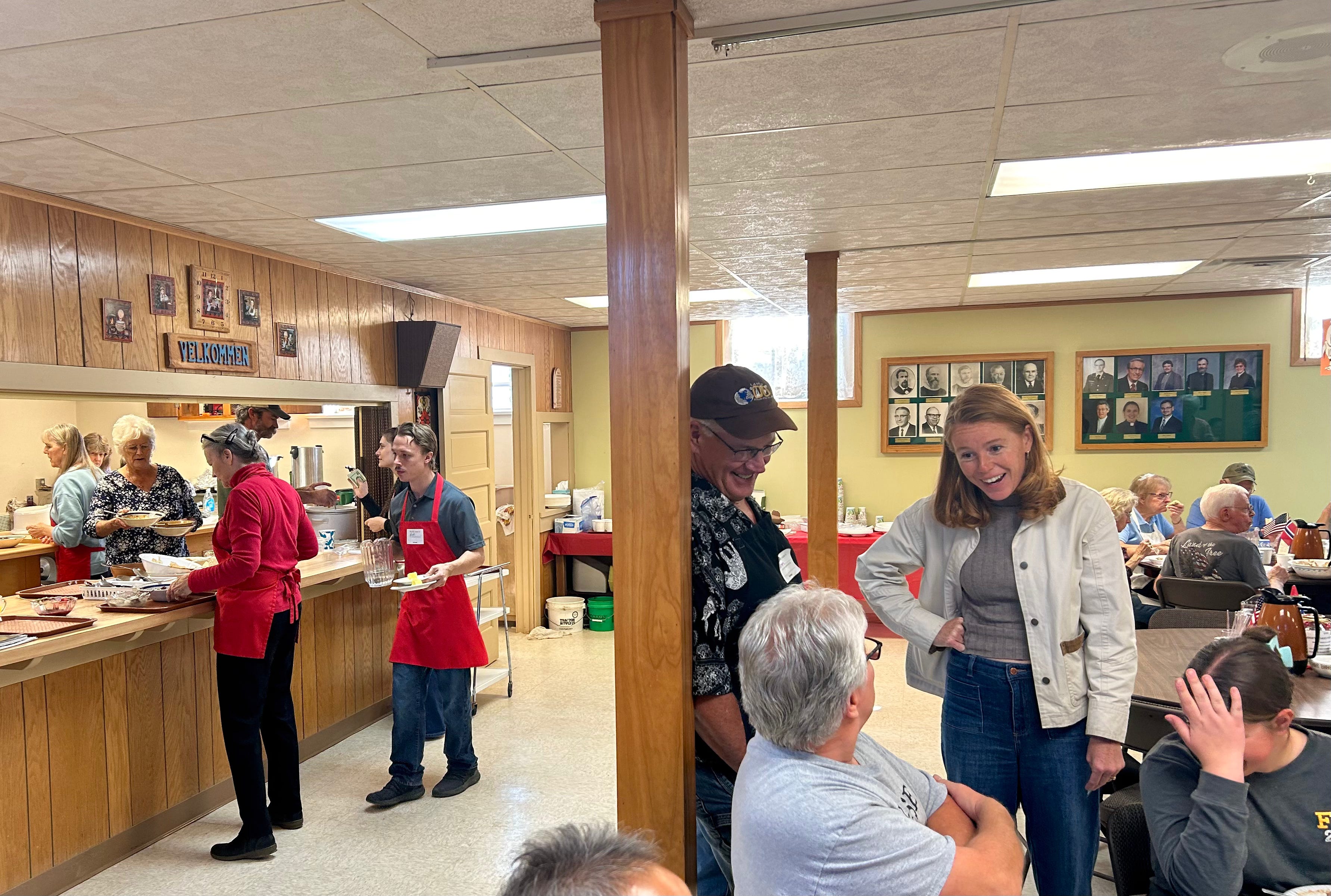
Cooke mentions issues like taking on “big ag conglomerates” in farming, like “(passing) comprehensive immigration reform” — how often do you hear Democrats voluntarily bring up that issue? — or raising the federal minimum wage. She puts a particular emphasis on health care, where she advocates for passing a public option, which she calls the “most achievable” policy on the matter, but also adds measures like expanding Affordable Care Act tax credit premiums, and getting Medicare to cover vision, dental and hearing.
Even as she emphasizes issues facing the district over any kind of party politics, “for the things I talked about wanting to get done, you have to build a majority that can work together,” she said. “Right now, with the fractions that exist within the party and the purity tests that exist within the party, it’s very difficult sometimes to actually get things done.”
This isn’t about reinventing the wheel, or creating a brand new paradigm for Democrats to be operating under. It is part of a certain back-to-basics, common sense simplicity that seems to be missing.
“I think we are just looking for some solutions,” she said. “I keep saying that word, but it’s just: answers. When something is broken, you fix it. And nobody has fucking fixed anything for a really long time, you know?”
She talks about tariffs (“if you go and talk to a farmer for a day, they could tell you that tariffs are not helpful”), about the Trump administration importing beef from Argentina (“why would we do that? Why wouldn’t we support beef producers here?), and talks about healthcare — from recent hospital closures in the district to the “drop in the bucket” that is the Rural Health Transformation Fund that her opponent has touted, to diminishing access and rising costs that plague the industry.
“There is simplicity in this, it’s just: don’t do these things that make no sense,” she said. “If you ever talk to a farmer, if you ever talk to somebody from a small town, that’s very easy.”
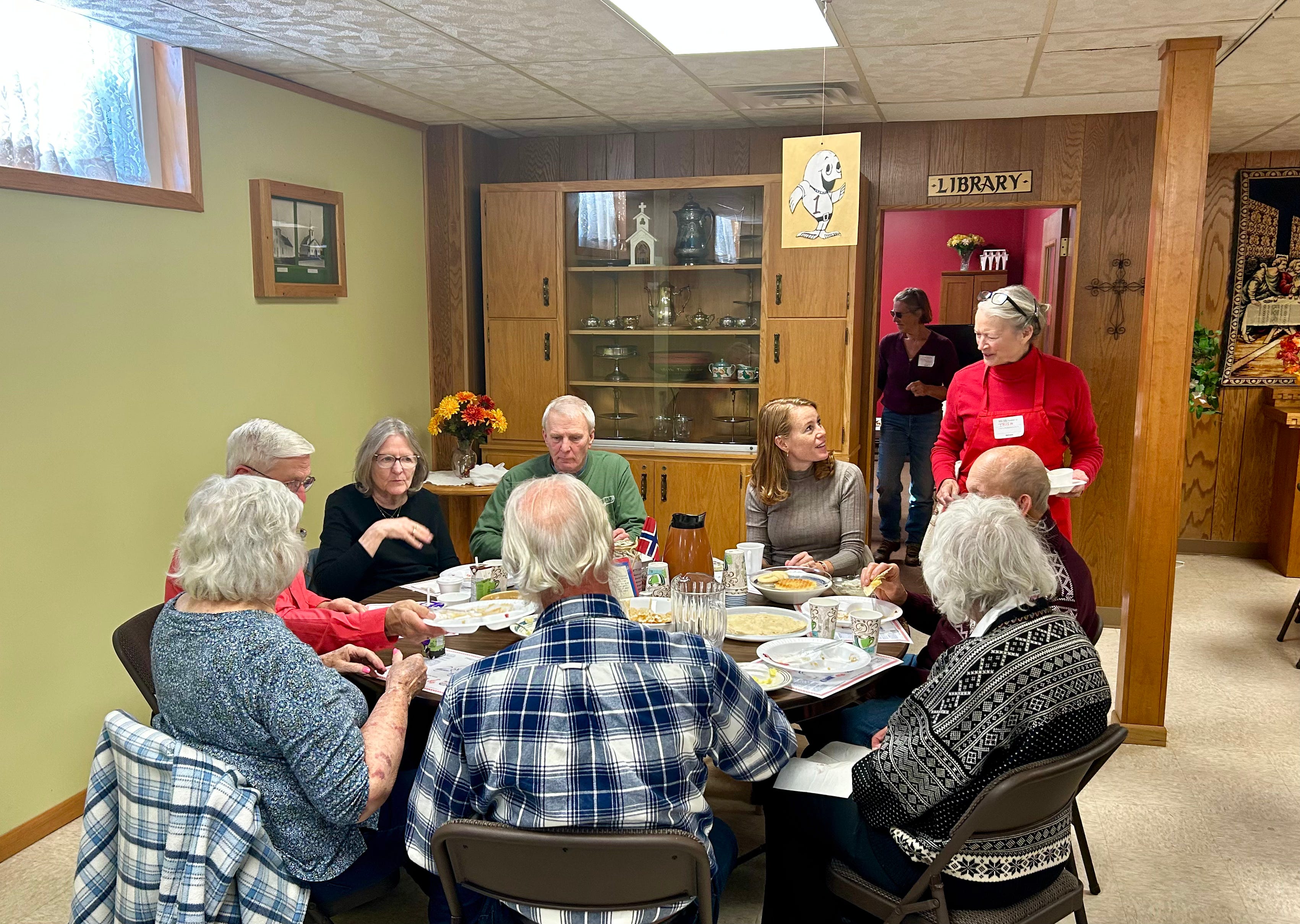
A sometimes-overlooked aspect of Wisconsin’s politics is that rural areas, while leaning more Republican and trending that direction as the urban-rural divide has been exacerbated in recent years, is that rural areas don’t vote as overwhelmingly Republican as some urban areas vote overwhelmingly Democratic.
Many of the state’s more rural Assembly districts can vote with a 30-point Republican advantage, but some Milwaukee or Madison districts can go 60 or more points in favor of the Democrat. Even in these deep red rural districts, you often see about a third of voters voting Democratic. That’s a big part of why Wisconsin has remained reliably purple, as some of its fellow Midwestern states like Iowa or Ohio have become more red.
The 2024 election amplified concerns that the bottom could drop out for any level of Democratic support in rural Wisconsin, that the Trump era realignment could be the beginning of an even more stark future for the Democrats in rural America.
In her 2024 run, Cooke notably ran ahead of the top of the ticket in the 3rd Congressional District, well ahead of Harris-Walz, and even ahead of Sen. Tammy Baldwin, who does better than most Democrats in western Wisconsin. And of course, this was as Republicans improved their margins up and down the ballot in the region. Perhaps she tapped into something then, and now, she appears to have taken that success a step further, and is in position to flip the district. Because right now in the 3rd District, Cooke signs are everywhere.
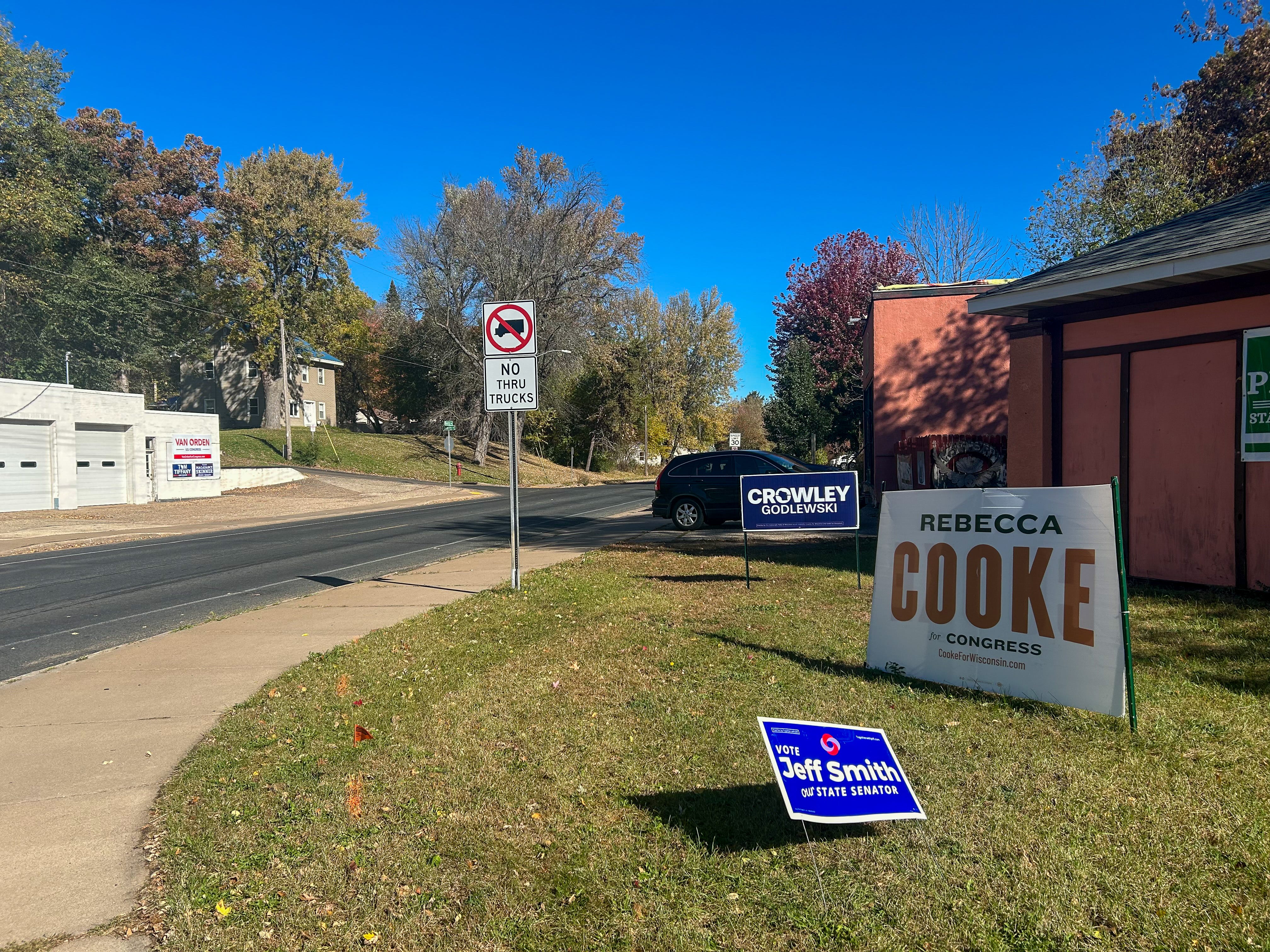
Crowley-Godlewski signs are everywhere, too — moreso than I would have expected. And sure, there are many Tom Tiffany signs and Derrick Van Orden signs and signs for downballot Republican candidates. That’s the nature of such a swingy district. But one thing does appear to have changed in a visible way since 2024. The Trump signs you’d see in farm fields and along highways? Those are gone. I mean, gone. Even the ones that stayed from 2020 to 2024 are now nowhere to be seen. The president’s approval rating in Wisconsin has cratered to its lowest point of any of his two terms in office. A golden age, this is not. The Trump era appears to be fading, at least in some sense.
Said Cooke, “Pretty soon there is not going to be a Donald Trump in the White House, and then we have to focus on: What are we actually doing? What is our vision for this country?”
Jeremiah Fredrickson, the Democratic candidate running in District 92, is one of several current or former educators to be running for Assembly this year. That’s not a coincidence. Knowing their candidates would inevitably be facing the type of misleading attacks that have become all too common in political campaigns in this day and age, Minority Leader Greta Neubauer and Assembly Democrats prioritized recruiting individuals well-known in their community to run for office, and oftentimes that means educators.
That’s also the case for Kevin Knoke, running just west of the 92nd in District 30 on the Minnesota border against Republican incumbent Shannon Zimmerman. Knoke spent more than 25 years teaching in the Hudson School District, and is also a military veteran who served overseas in Operation Enduring Freedom. He thought about running before, but decided to run now once the frustration with the current political environment boiled over.
“What I was seeing in our state government and in our national government was things were just not getting done,” he said. “The people’s voice was not being heard, and so the more frustrated I got, the more I wanted to get involved — and start being a voice for the people of Wisconsin. It was a matter of, hey, enough is enough.”
Both Knoke and Fredrickson are challenging Republican incumbents in these northwestern Wisconsin districts, each of which went for Trump by between 4-7% in 2024.
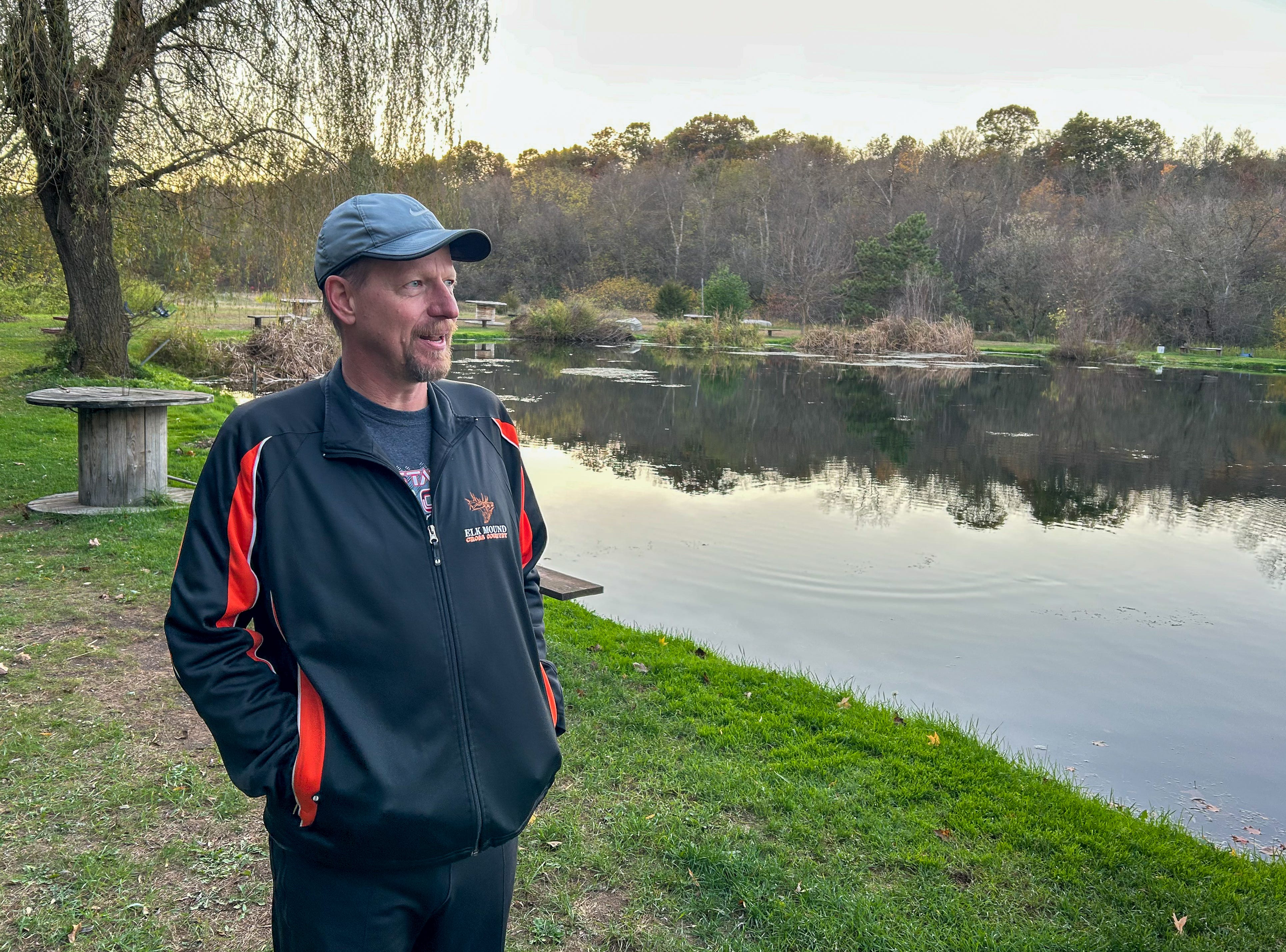
Fredrickson, however, has not been a teacher for several years now. He taught high school agri-science in the village of Elk Mound for 16 years — “everything from food science to dairy science to environmental education,” he said — and still coaches track and cross country (he goes by “Coach Fred”), but he left teaching after Act 10.
“It changed not my feelings for education, but the direction of education,” he said. “It wasn’t so much about the students as much anymore.”
Fredrickson is not the type of person to point fingers and name names and talk down about others, even about this experience that altered his career trajectory, or even when I bring up his opponent, Clint Moses, so he doesn’t have much to say about Scott Walker or Act 10 or those decisions that led to him leaving education.
“Mom always told me not to speak ill of people,” he said.
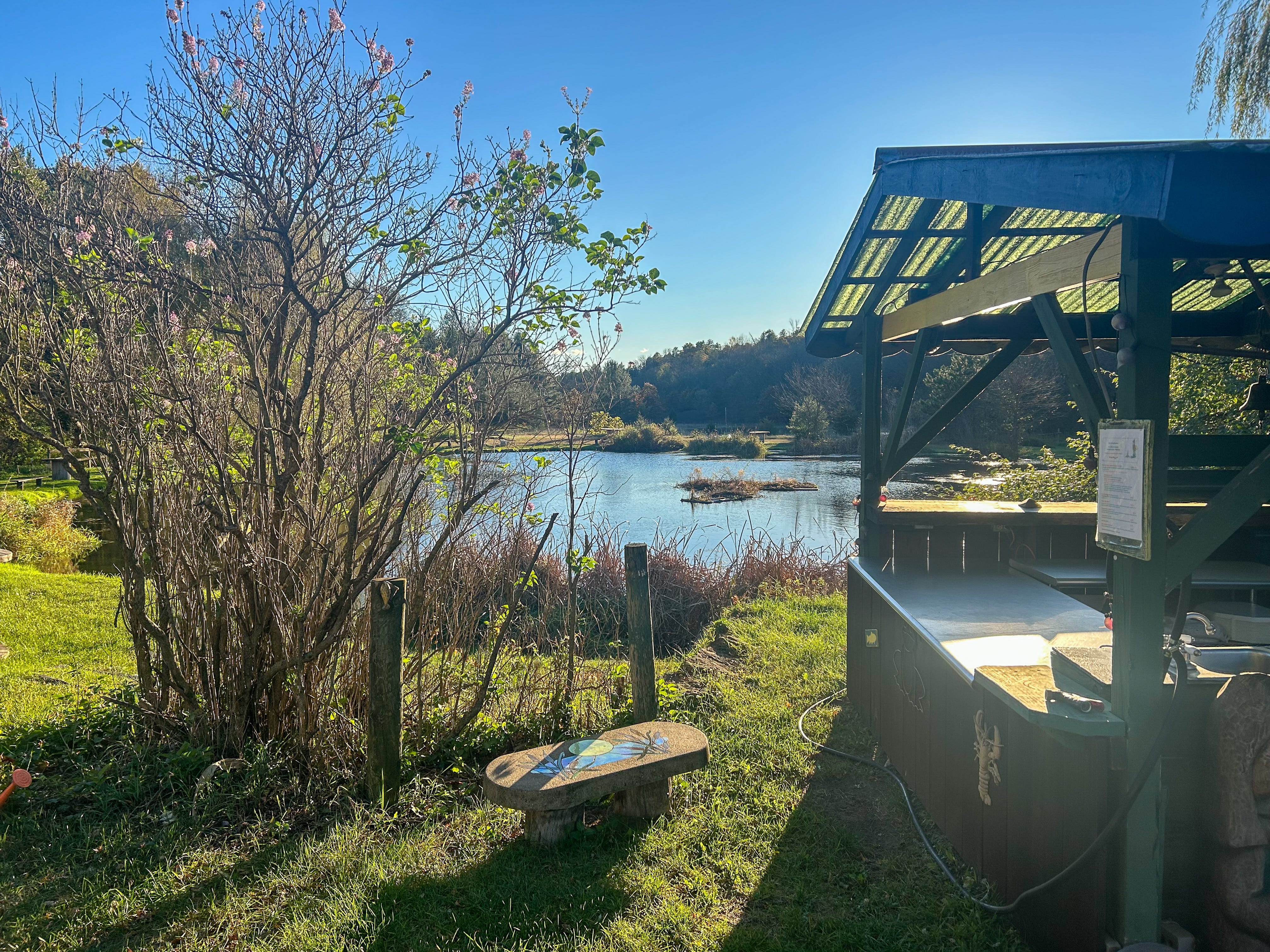
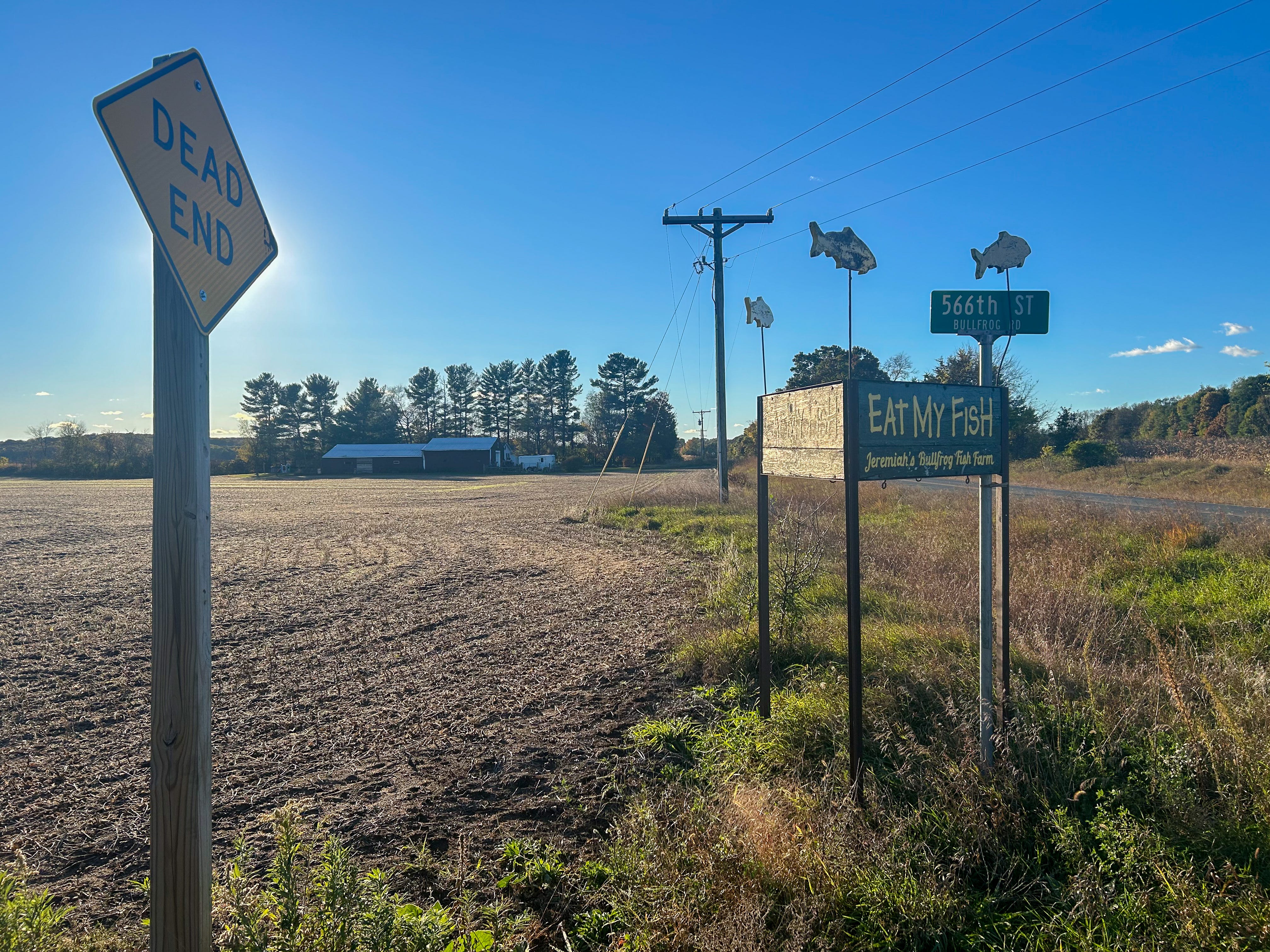
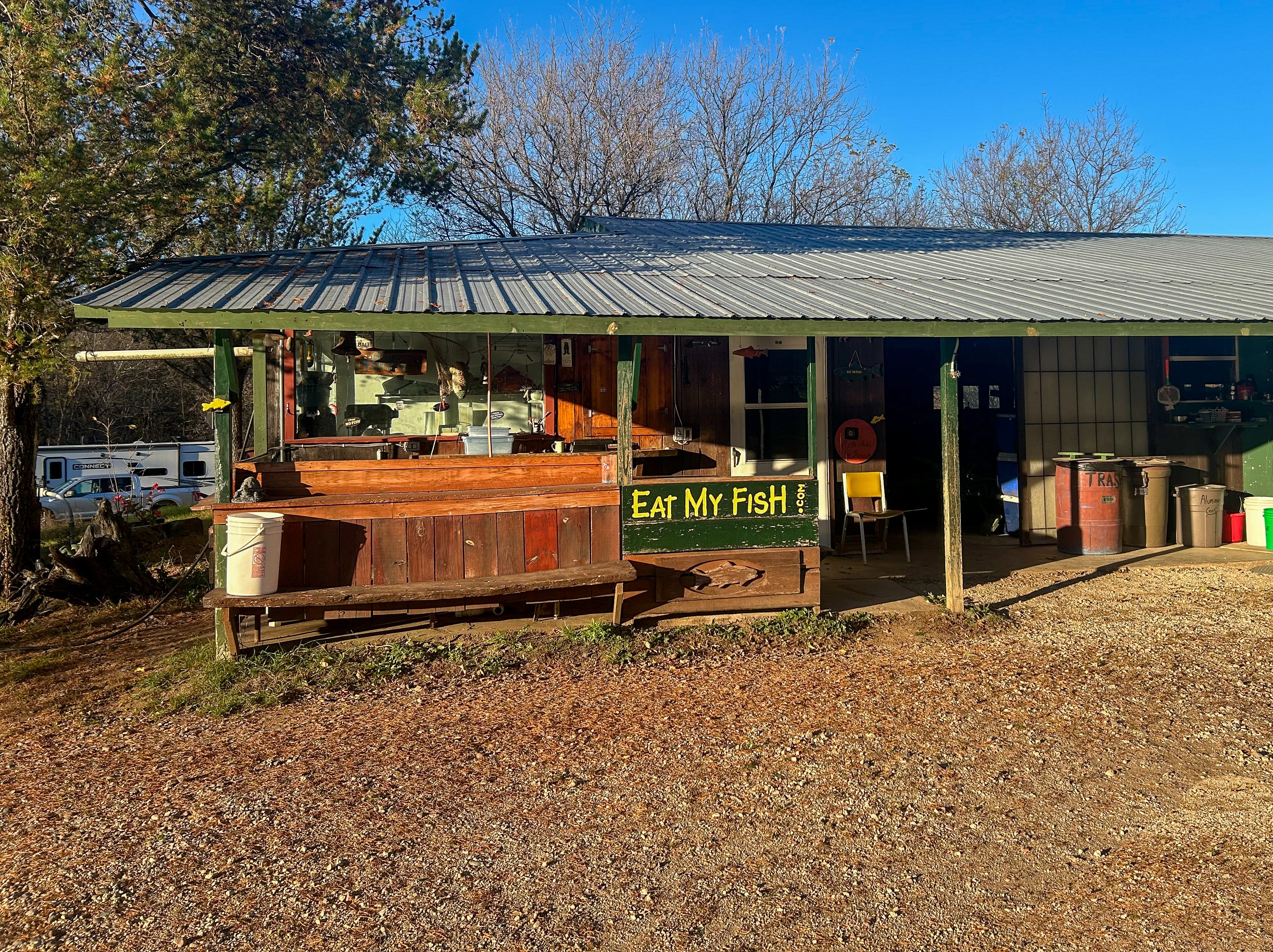
Now, Fredrickson is the owner and operator of an agri-tourism business in a rural area south of the city of Menomonie and north of the Chippewa River. It’s called “Jeremiah’s Bullfrog Fish Farm.” There, you can go fishing for rainbow trout that are raised at the farm, and have it cooked at an outdoor on-site restaurant.
“It’s about three businesses in one,” Fredrickson said. “Year round, we raise fish and do our own processing. We do fresh, frozen, smoked to spread and pickled for about 16 different grocery stores and restaurants. During the summer months, we also do about five farmers markets a week. Then, we’re also open to the public for fee fishing. We’ve got a little bar and restaurant so people can come out, they’ll catch a fish, we’ll clean it, and cook it right here.”
By now, Fredrickson has been the owner and operator of this business for about a decade. They breed and raise rainbow trout, release them into ponds they essentially control, and as we walk by one of those ponds, he says “there are probably about 1,500 to 2,500 fish out in the pond right now.” Thousands more are being raised in their indoor facility.


“As a nation, I think we’re at kind of a turning point right now,” Fredrickson said, talking about the reasons he decided to run for office.
He mentions conservation and the environment, and his concerns over the Knowles-Nelson Stewardship Program ending this past summer. Being from a family that took vacations to state parks, not to Disney World, he said, makes him want his own children to be able to enjoy those same things and pass along those traditions. He talks about education, of course, and the need to fix a broken funding formula and keep good teachers in the profession, and keep public schools on the right track. He talks about data centers, and making sure there are “safeguards in there to protect the environment, protect our water, land” and protect ratepayers, make sure they’re “constructed by Wisconsin union workers” and make sure companies are being transparent from the start of these projects and not doing business through NDA’s. He talks about the economy — “whether it be the cost of gas, cost of groceries, health insurance,” he said, “and if we don’t start swinging that pendulum back the other way, I think we could be in real trouble here as a nation.”
Fredrickson doesn’t consider himself to be someone particularly political, and used to consider himself to be an independent, and this is his first time running for elected office. His name came up as part of the recruitment effort of the Assembly Democratic Campaign Committee (ADCC), through connections with conservation groups, and he says it was a call from U.S. Senator Tammy Baldwin that became the tipping point in his decision to run for office.
“Tammy called me back in December and said, ‘you’re a farmer, you’re a former teacher ,and you’re a small business owner — you’re like the trifecta as far as a candidate goes’,” he said. “So, her voice carries a fair amount of weight…It was that one phone call that pushed me over the edge.”
This isn’t the only time the word “trifecta” comes up in our conversation. If Fredrickson wins this race, it will likely mean that Democrats will have won a trifecta, or at least have flipped both the Senate and Assembly. This is a “Lean Republican” district, but not so much so that it’s out of range for Democrats. Still, it might be among the more challenging districts that’s in play — Moses won by nearly 7% two years ago.
The trifecta possibility has been a motivator for Fredrickson, too. “I like the idea of getting elected and actually being able to do something,” he said. What a concept — but one that rings true after eight years of divided government.
He mentions something that Jeff Smith, the Democrat representing this district in the State Senate, and is in a re-election campaign of his own, has said about how much has stalled under Republican control of the legislature, and how little across-the-aisle work has happened.
“Jeff Smith talks about 408 bills, and 408 things they’ve written up over the last session and of those, something like four actually got into a discussion and only one ever got to a vote,” he said. “So, Democrats have had ideas, and people keep saying, well, Democrats don’t have any good ideas; they haven’t done anything. Well, they haven’t been allowed to do anything. So, that’s what I’m excited about, that some of these ideas will finally come through, hopefully they’re good, and we’ll make positive changes for everybody.”
Here again, like with Cooke, there’s a back-to-basics simplicity in his approach.
“I think we need to get back to working together,” he said. “I jokingly say, on doors, that I’m hoping my classroom management skills of getting kids to talk to each other will work down at the Capitol and get Republicans and Democrats working together again. And I hope that’s true. And I think we need to get back to that because in the end, we’re all humans.”
Fredrickson talks about some of the conversations he’s been having when going door-to-door, and about that message of wanting to bring people together, and he says some of that message is resonating with “non-red hat wearing Republicans,” who have some of the party’s more traditional values like fiscal responsibility, he says, and even just being “worried about their neighbor” as well as themselves, he adds.
He’s hoping this is part of the message that breaks through — turning the page on Trump. Frederickson even says that he wasn’t always against Trump, but that the actions of his second term have further turned him against the president.
He adds, “We’re all in this together, and if we don’t start working together, it’s just going to continue to get worse. And our current president is very good at driving wedges between people and cursing this division. And if we stop looking at the non-issues that are being brought up and look at the actual issues that affect everybody, I think we’ll be in a lot better place.”
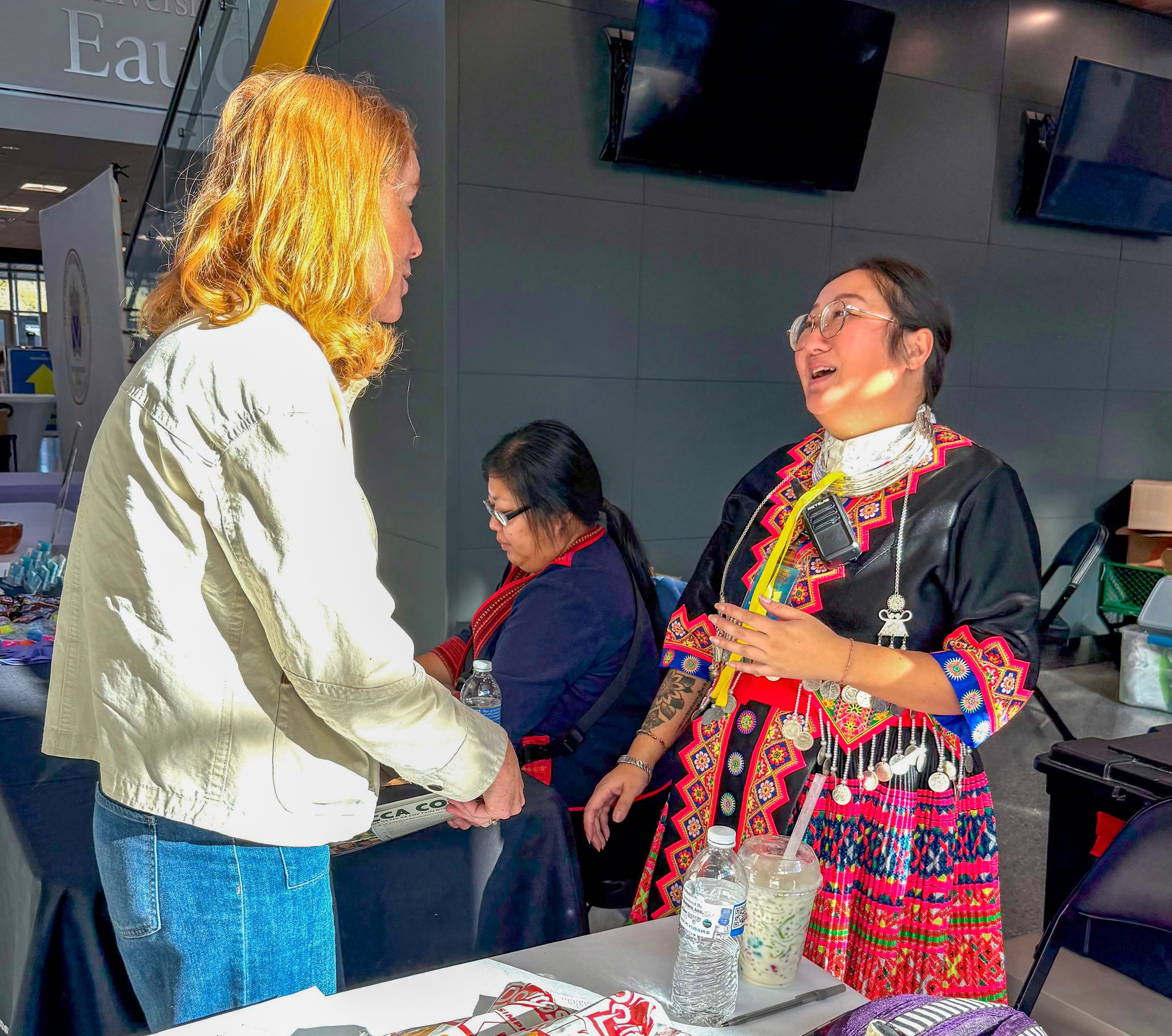
In Eau Claire, at the Hmong New Year celebration at Sonnentag Event Center, I overhear someone saying, “That’s Rebecca Cooke! I’m starstruck!”
They eventually go take a photo with her as she makes her way through the crowd, but perhaps more than anything that this is indicative of how the stakes of this race have been raised, and how much added notoriety comes with that, and how in focus this race has been in western Wisconsin, with astronomical spending making this race inescapable.
This is one of a handful of districts that could determine control of the House, and for Cooke, this has been a long campaign. Not only did this particular campaign begin early in the midterm election cycle, but this is the third cycle in which she’s been on the ballot. She’s essentially been campaigning for five years. She outperformed expectations the first time, but came up short in the primary. She outran the top of the ticket in 2024, but lost to Van Orden by 2.7%. There are many reasons to suggest this time could be different for the Eau Claire native who still works waitressing shifts in her hometown.
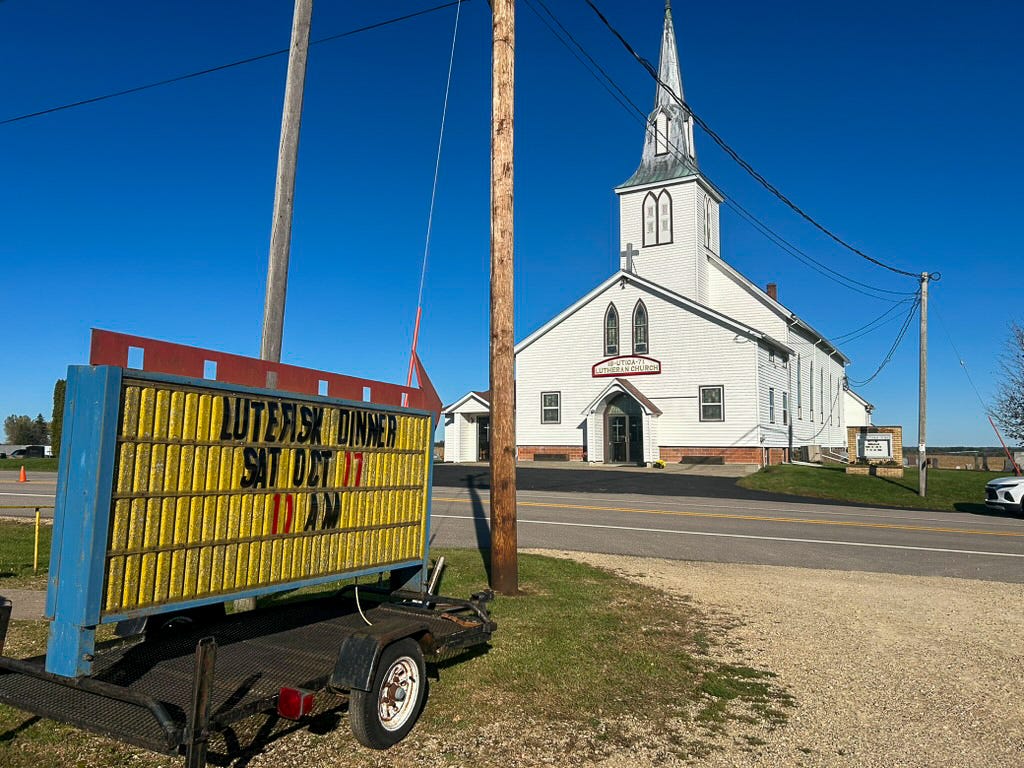
“I’m showing up,” she said. “We try to be everywhere all at once, and making sure that people feel seen by our campaign — whether it’s a lutefisk lunch at a church basement or a Hmong New Year (celebration)...We’re here to be of our community as much as representing our community, is what my campaign is focused on.”
Something about Cooke’s approach on this campaign suggests that perhaps it may really be that simple. It is about showing up. It is about being there for people. It is about taking a common sense approach to the issues. It is about wanting to build something durable, and not just winning a flash-in-the-pan victory.
Perhaps in 2026 is when things might change — both as the end of something that’s run its course, and the start of something new.
In more recent days, the prognosticator class has moved this district into “Lean Democratic” territory, and it would not be a surprise to see Cooke prevail on Nov. 3. The true measure of success, though, will be, as Cooke suggested, in how she and Democrats would be able to deliver. To make this coalition something truly durable, to withstand these swings in the national environment, to not fall victim to a realignment that shrinks the size of Democrats’ big tent. To build something real, and lasting.
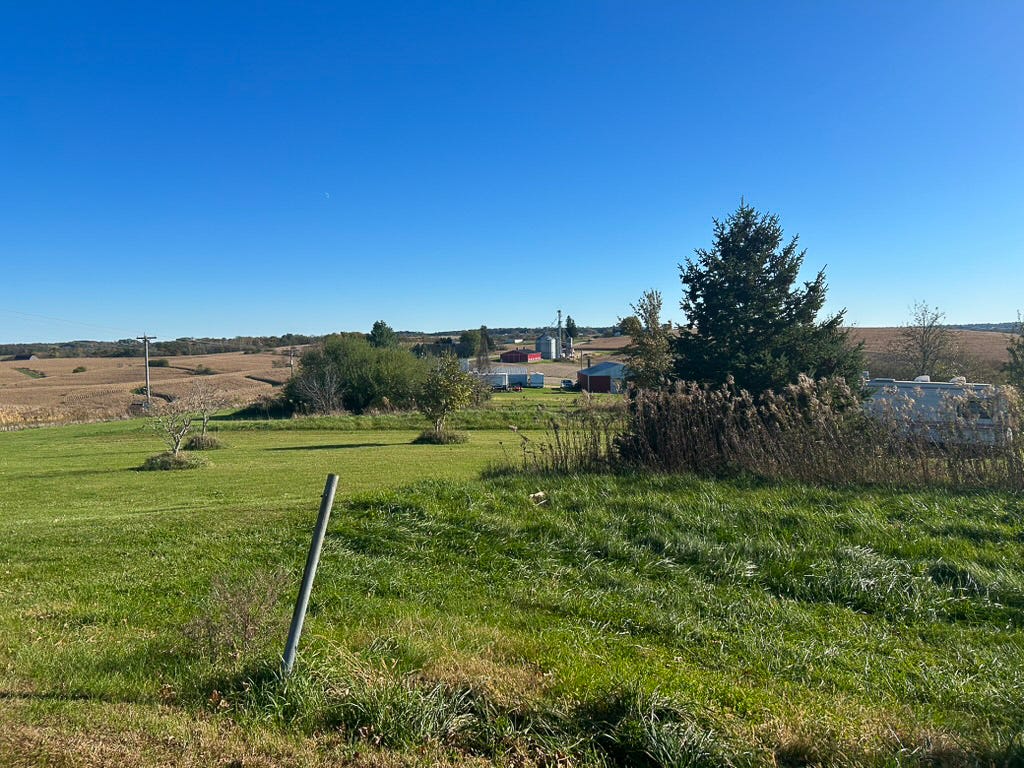
After Obama and after Trump — and if things break right for Democrats, after Van Orden and after a 16-year Republican legislative majority — perhaps what comes next for the Driftless Region and western Wisconsin might come less from any one individual, but in the simple things. Showing up. Working together. Fixing what’s broken. Finding solutions.
And whether it’s at a lutefisk dinner at a church basement in the Driftless Region or a fish farm in Dunn County or a cookout in Viroqua or a main street in Mount Horeb, there is simply a whole lot that needs to get done. There are communities being hollowed out, with schools closing and public services disappearing and family farms shrinking or shutting down, bleak economic realities for many who have felt left behind.
“There are so many problems, and you can point to the problems and you can see them,” said Cooke. “But we have to go do something about it. And it can’t just be bitching about what the last administration did or what the last Congress did. It’s like: You’re in the seat of power. What are you going to do now? It needs to be meaningful.”
Cooke talks about the experience of selling the cattle on their family farm when she was in high school and how difficult it was to see her father go through that, and how that echoed through her family’s 150-year heritage on that farm — and in this district.
“There’s just not enough happening now, you know?” she said. “The burdens are so much deeper and the economic hardship is so much deeper. There were some farms that were there today that I did a round table with that were just like, I don’t know how we do another year. And that’s the last story that I want to hear.”
Western Wisconsin needs answers. The Driftless Region needs answers. Up and down and through the 3rd Congressional District, people need answers. They haven’t been getting them. But maybe they’re not that far out of reach. Maybe they’re just one door away, ready to be listened to for once — and to eventually share something as unassuming as a candy bar together.
“It’s not that difficult to be a good person, to show up to a town hall, to be present in a community, to listen to voters,” said Cooke.
“There is simplicity in it.”
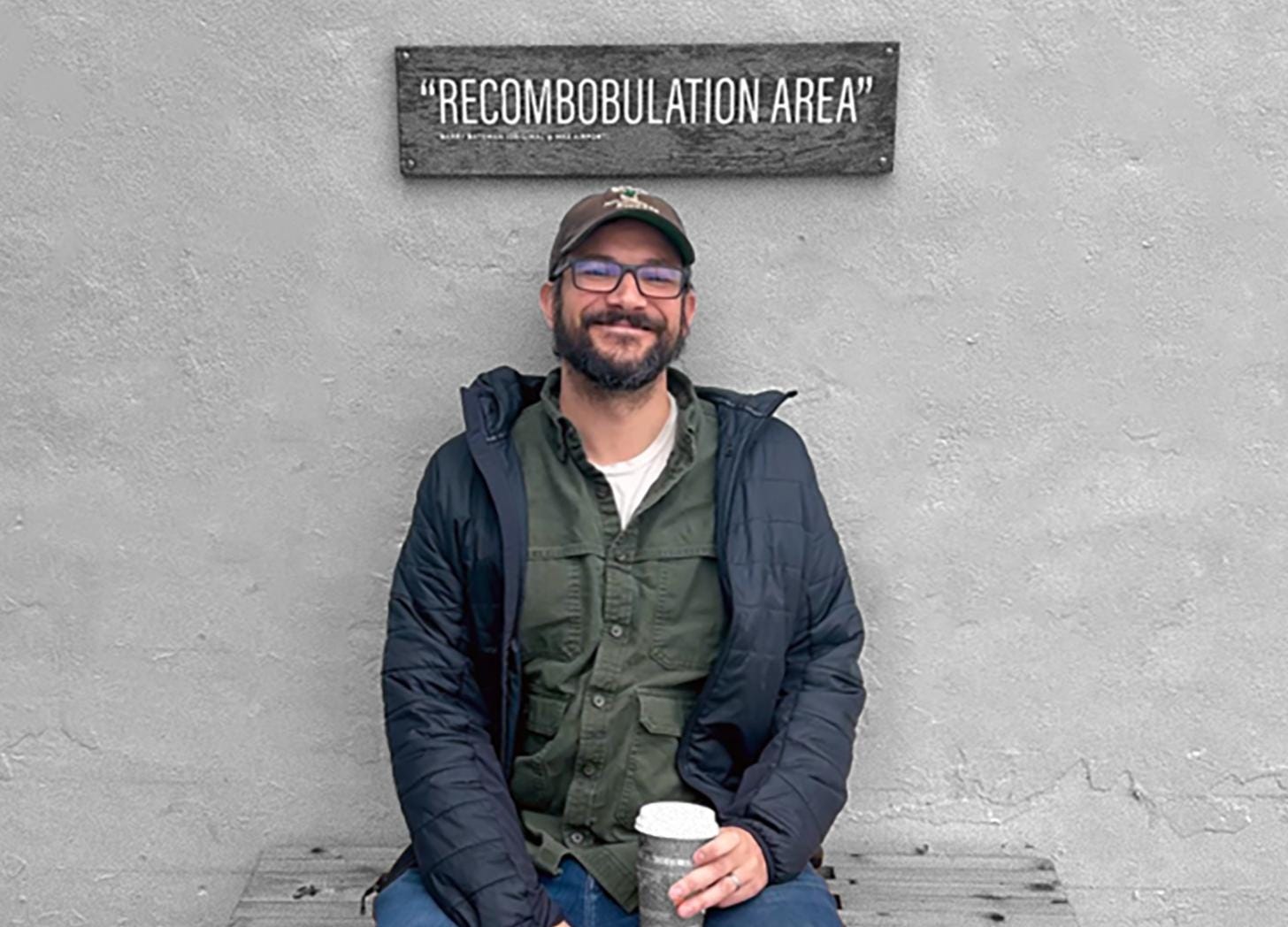
Dan Shafer is an independent journalist from Milwaukee who writes and publishes The Recombobulation Area. He worked with Civic Media from 2024 to 2026. He’s written for The New York Times, The Daily Beast, Heartland Signal, Belt Magazine, WisPolitics, and Milwaukee Record. He previously worked at Seattle Magazine, Seattle Business Magazine, the Milwaukee Business Journal, Milwaukee Magazine, and BizTimes Milwaukee. He’s won 24 Milwaukee Press Club Excellence in Journalism Awards. He’s on Twitter at @DanRShafer.
Subscribe to The Recombobulation newsletter here and follow us on Facebook and Instagram at @ therecombobulationarea.
Already subscribe? Get a gift subscription for a friend.
Part of a group who might want to subscribe together? Get a group subscription for 30% off!
Follow Dan Shafer on Twitter at @DanRShafer, at BlueSky at @danshafer.bsky.social, and on Threads at @danshafer.
Iowa’s 1st Congressional District is the only
Each Assembly district has a population of about 59,000.
Each Senate district has a population of about 178,000.
Iowa’s 1st Congressional District is the only with more Obama-Trump counties.
Each Assembly district has a population of about 59,000.
Each Senate district has a population of about 178,000.