

The Recombobulation Area is a 19-time 21-TIME! Milwaukee Press Club award-winning opinion column and online publication founded by Milwaukee journalist Dan Shafer.
Democrats have their best chances of winning a majority in the Wisconsin State Legislature since the year Barack Obama was first elected president.
There’s been an extraordinarily long and as-winding-as-the-boundaries-of-a-gerrymandered-district road to get here, but we are here. Here we are.
Now, let’s entertain the notion that this could actually happen. For 16 long years, Republican control of the state legislature — often under the leadership of Robin Vos, the longest-serving Assembly Speaker in Wisconsin’s history — has been the GOP’s primary source of power in Wisconsin. Much has changed in Wisconsin over those 16 years, but the legislative branch has remained under the same partisan control. Through the eight years of Republican Scott Walker’s time as governor and the now-nearly-eight years of Democratic Tony Evers’ — along with a leftward and pro-democracy ideological shift in the balance of power on the state Supreme Court — the Republican majority in the state legislature has remained. There are high school students in this state who have never lived in a Wisconsin where there’s been Democratic control of either chamber of the state legislature. The Packers’ last Super Bowl victory happened more recently than Democrats last controlled the state legislature. It’s been a really long time.
Throughout this time, the Republicans running things have not exactly been moderate, middle-of-the-road Republicans. Wisconsin’s archconservative legislative leadership has governed the state more like a deep red state than the purple state it is. In the 2010s, it often served as the petri dish for far-right “reforms,” particularly when Republicans had trifecta control while Scott Walker was governor. In many ways, in the years following Tony Evers’ 2018 victory, that Republican-controlled legislature moved even further away from the center — in a mix of gavel-in, gavel-out obstruction, seemingly endless election-denialism, and other MAGA-fied lurches to the right.
Evers, in his nearly eight years as governor, has often been described by his fellow Democrats as a great “goalie” for blocking many Republican-authored bills from becoming law with his powerful veto. But that has meant that Democrats have never been in a position to play much offense and pass bills of their own. Republican leadership has often gone over the top to block Democratic bills from even having a public hearing, much less a vote. In this era of Republican control of the legislature since 2011, the number of Democratic-authored bills that received a public hearing dropped to just 1.9% in the 2021-22 legislative session.
This divided, ultrapartisan dynamic surfaces every budget cycle, too. For the last eight years, every budget cycle in Wisconsin has started in a similarly frustrating manner. The Democratic governor, Tony Evers, will announce a budget proposal. Then, the Republican-controlled budget committee will get rid of just about everything from that proposal, removing hundreds of items almost regardless of what they might be. These might be popular proposals with majority support (expanding Medicaid, legalizing recreational marijuana, adding universal background checks for firearms, creating a paid leave program); they might be other post-Walker Democratic priorities (repealing anti-union laws like Act 10 or right-to-work, or big business tax breaks); they might be the type of thing both parties say they want to do (increasing mental health funding in schools, cutting taxes on the middle class); they might be more general nuts-and-bolts governing measures. But pretty much all of it gets tossed.
We’ve grown unfortunately accustomed to so much of this behavior, as though it’s just how things work. But it doesn’t have to be this way. And if voters in Wisconsin want change in this upcoming election, it’s votes cast in state legislative races, more than any vote for president or in any federal election, that will deliver that change.

Some level of change is coming to the state legislature no matter which party ultimately wins control. Part of this regrettable era will come to an end through Vos’ pending retirement in the Assembly and the many Republican retirements in the Senate.
But the opportunity before voters this November is bigger than any one politician. With the first open race for governor in 16 years, and the first state legislative election happening in full after the fall of the gerrymander, this election is the real fork-in-the-road moment for Wisconsin’s state government.

So much has been building to this. Evers and the blue wave in 2018, and his re-election in 2022. State Supreme Court race after state Supreme Court race, from Rebecca Dallet’s victory in 2018 through Chris Taylor’s earlier this year, toppling the gerrymander along the way. Ben Wikler and the revival of the Democratic Party of Wisconsin. New maps. Fresh hope. So much of what’s happened has been building to this very opportunity.
The last fork-in-the-road moment for Wisconsin arrived in 2010. Scott Walker and the era of conservative conquest in the state came next. This is Wisconsin’s opportunity to turn the page on that regrettable era and chart a course for a better future.
Democratic Senate Minority Leader Dianne Hesselbein recently said, “I sincerely think this is the most important election that Wisconsin has ever seen,” in an interview with The New York Times. As trite as the most important election of our lifetimes brand of rhetoric can be, Hesselbein just might be right about this one. As far as Wisconsin’s state government goes, there has been no election more important than the one before us in quite some time.

For Democrats, electing David Crowley to be the next governor would be a monumental achievement. But without flipping the legislature and winning a trifecta, it would only be a continuation of the divided government dynamic that has dominated state politics for eight years. Crowley would, like Evers, be playing a whole lot of goalie if he were to win and the legislature remained under Republican control.
Any major change at this fork-in-the-road moment would come through the legislature. But while Democrats have their best opportunity to win control of the legislature in nearly two decades, it’s far from a given. Many prognosticators think Democrats have good chances of winning control of the Senate, but flipping the Assembly projects to be a tougher hill to climb. The most likely outcome for this fall’s elections might just be a different form of divided government than what we’ve seen for the last eight years: one in which the Senate and Assembly are controlled by different parties.
Nevertheless, being a slight underdog to win control of a legislative chamber that has been under Republican control for 16 years is a much better position for Democrats to be in than at any point in recent memory.
Here at The Recombobulation Area, we preview every last race on the ballot in the Wisconsin State Legislature. This will be our fourth time doing so. In 2020, our preview looked at the possibility of Democrats flipping a handful of seats that could have narrowed Republicans’ Assembly majority from a 29-seat margin to maybe a 26-seat margin. In 2022, it was about how Republicans had drawn themselves a fresh path to a two-thirds supermajority. Two years ago, new, fairer maps were in place, giving Democrats a chance at an Assembly majority, but it wouldn’t be until 2026 that flipping both chambers would be within reach.
Now, it’s a realistic possibility. This is the fork in the road, Wisconsin. Time to make your choice.
COMING SOON: The Recombobulation Area’s district-by-district preview of every race on the ballot in the Wisconsin State Legislature.
Subscribe to support our work — and so you don’t miss a thing.
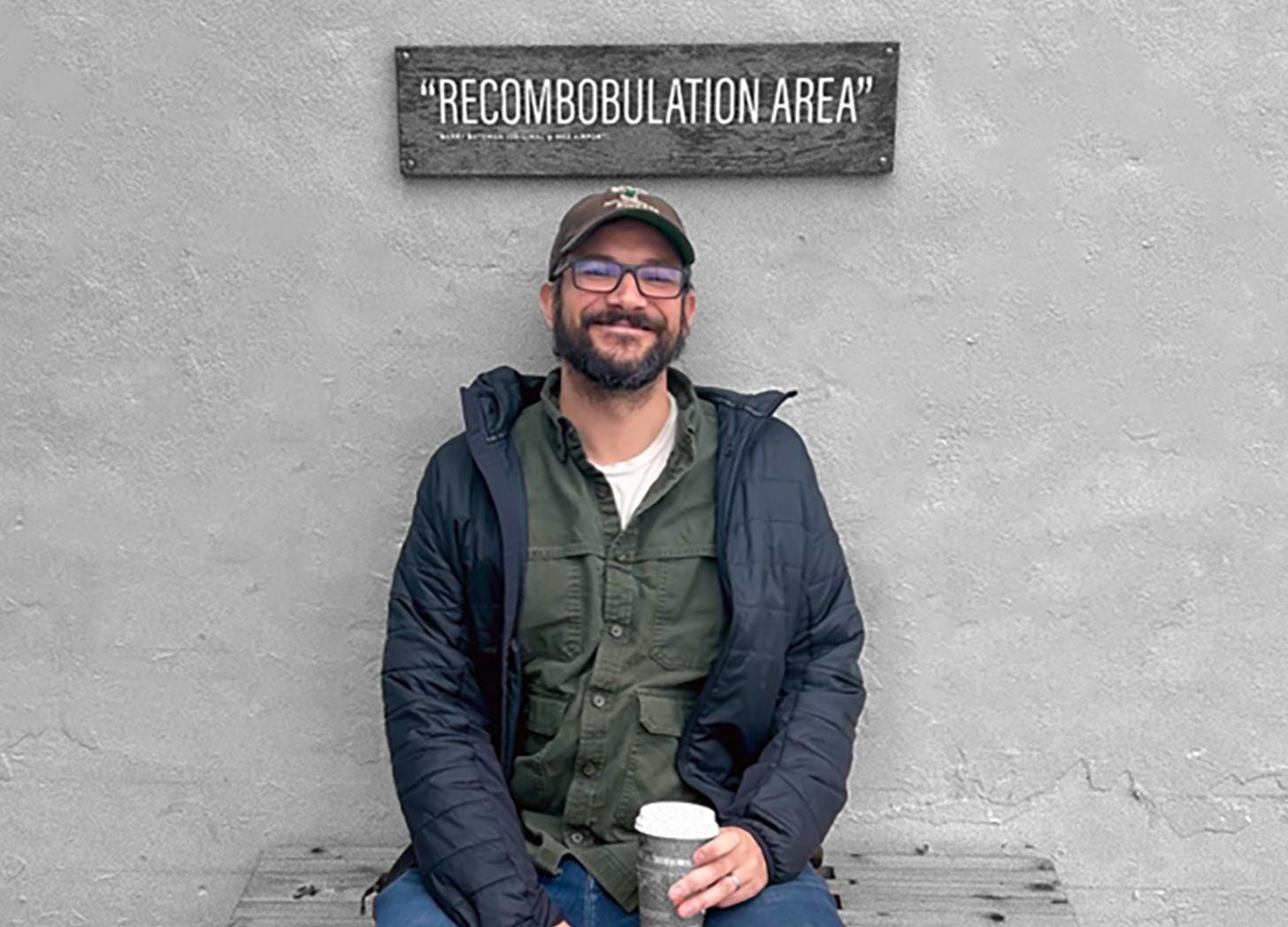
Dan Shafer is an independent journalist from Milwaukee who writes and publishes The Recombobulation Area. He worked with Civic Media from 2024 to 2026. He’s written for The New York Times, The Daily Beast, Heartland Signal, Belt Magazine, WisPolitics, and Milwaukee Record. He previously worked at Seattle Magazine, Seattle Business Magazine, the Milwaukee Business Journal, Milwaukee Magazine, and BizTimes Milwaukee. He’s won 24 Milwaukee Press Club Excellence in Journalism Awards. He’s on Twitter at @DanRShafer.
Subscribe to The Recombobulation newsletter here and follow us on Facebook and Instagram at @ therecombobulationarea.
Already subscribe? Get a gift subscription for a friend.
Part of a group who might want to subscribe together? Get a group subscription for 30% off!
Follow Dan Shafer on Twitter at @DanRShafer, at BlueSky at @danshafer.bsky.social, and on Threads at @danshafer.
Man, it is such a tight race for control of the Assembly. I would bet pretty confidently that the Democrats will take the Senate by a seat or two, but the Assembly has me stressing. I could see it being 50-49 or 49-50.
Also, it is a strange feeling to go on Substack and see a picture of a place where I was just walking a couple hours ago. Nice park. It is probably the main reason I chose this neighborhood when I abandoned the east side thirty years ago.