

The Recombobulation Area is a 19-time 21-TIME! Milwaukee Press Club award-winning opinion column and online publication founded by Milwaukee journalist Dan Shafer.
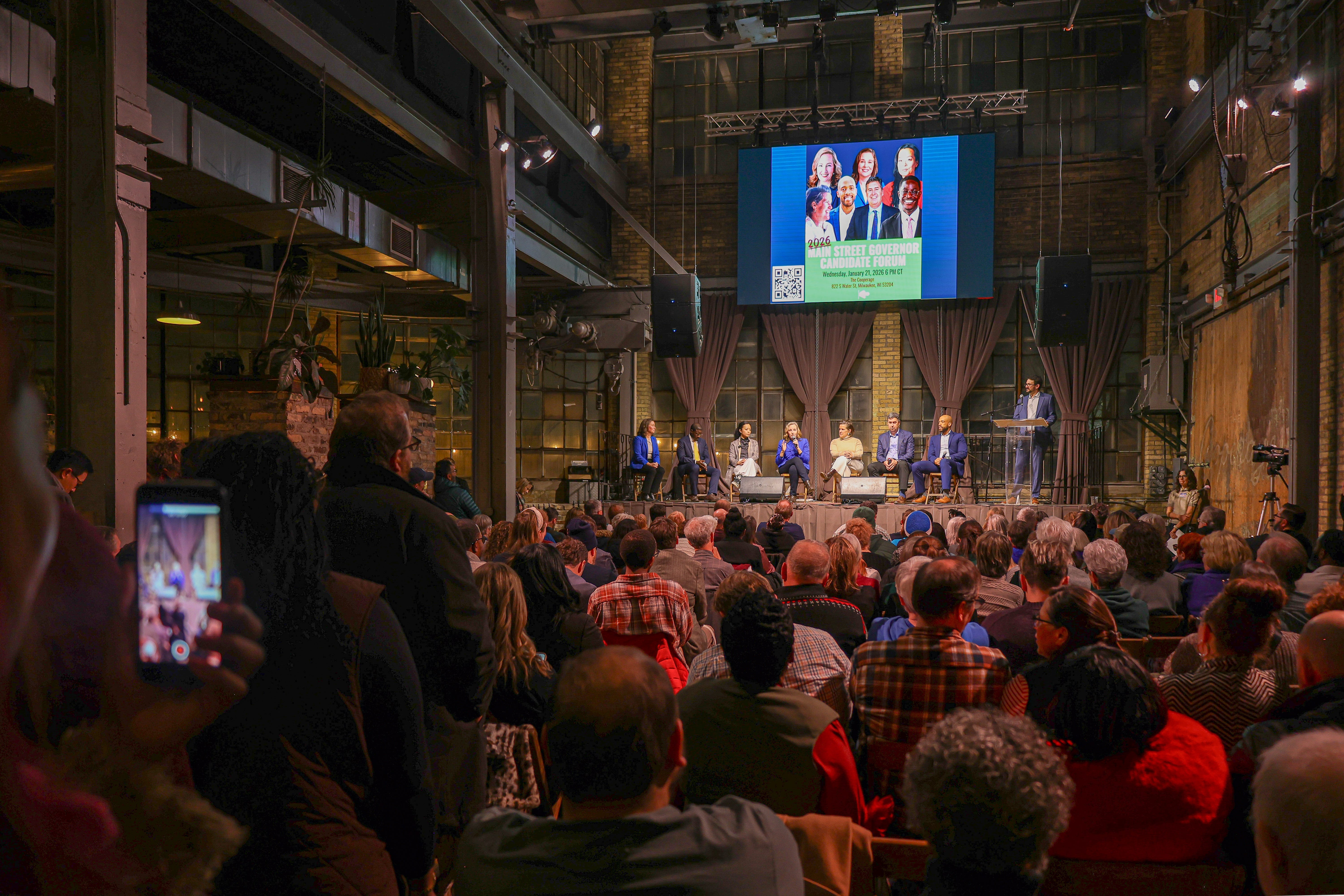
UPDATE, 7/09, 9:15 a.m.: Folks, WE ARE REOPENING VOTING!
We have gathered the data from the first wave of this experiment, updated it to reflect David Crowley’s departure from the race, and will now keep this open as planned until noon on Tuesday, July 14.
Happy voting!
UPDATE, 7/08, 2:15 p.m.: We have closed voting on this Ranked Choice Voting Experiment early.
Two reasons: 1) We received a larger than anticipated number of votes in the first 24 hours, giving us the large sample size we were looking for in this experiment. 2) Milwaukee County Executive David Crowley dropped out of the race on Wednesday, June 8, changing the nature of our ranked-choice ballot.
Wisconsin’s partisan primary is on Aug. 11. The highlight item in this primary is, of course, the Democratic primary in the race for governor.
Polling on this race has been remarkably sparse. Context about who might be in the lead, or who might be in contention, hasn’t been easy to come by. And given the size of the field, it’s likely that whoever ends up winning will do so with a plurality — and not a 50%-plus-one majority — of votes.
But what if we thought about this race differently?
Ranked-choice voting is a system that has been growing in popularity, with more and more elections turning to this electoral process. The most obvious example in recent years has been in the 2025 mayoral election in New York City, where Zohran Mamdani emerged from the field to eventually win the race for mayor. Mayoral races here in the Midwest, too, have included ranked-choice voting — Minneapolis and St. Paul now use the practice, and several communities in Illinois and Michigan are also exploring plans to use ranked-choice voting.
We’ve seen this concept emerge in Wisconsin, too — to a certain degree. While some Republicans have opposed the concept, even pushing a constitutional amendment that would outlaw the practice in the state, others in the GOP have been more open to it. Earlier this year, Democratic legislators Mark Spreitzer and Clinton Anderson introduced a proposal on ranked-choice voting in Wisconsin. Last year, the Democratic Party of Wisconsin selected its next chair in Devin Remiker with a ranked-choice voting process among convention delegates.
We want to know how this system might work in the Democratic primary in the race for governor.
Given that this is a fairly large field, with six1 candidates competing to be the Democratic nominee, this is the perfect type of race to test how ranked-choice voting might work in such a race.
So, let’s try an experiment. We are inviting you to participate in a ranked-choice voting experiment for the Democratic primary for governor. At the link below, we would like for you to rank the six five candidates, beginning with your first choice. You may rank all six five, but that is not required.
We are hoping that several hundred people of our more than 10,000 subscribers will participate in this experiment in order to gain a sample size large enough to produce a meaningful result.
To help with this, The Recombobulation Area is working with John D. Johnson, research fellow at Marquette University, to conduct this experiment. Johnson has experience working with the Marquette University Law School Poll, and he will help analyze the data to ensure it’s not being manipulated and to ensure it’s an accurate reflection of what people participating in this experiment are expressing in their RCV ballots. (He also has a Substack called “Blue Book” that you should subscribe to here.)
To be sure, though, this is not a purely scientific polling process. This is an experimental poll of readers of The Recombobulation Area, so the sample set is likely to skew toward higher-engagement voters (you know, folks who might subscribe to a Substack newsletter on Wisconsin politics), and may oversample respondents from Milwaukee and southeastern Wisconsin, where this publication is based.
It’s important to note that this will not reflect what any formal, professional, scientific polling might illustrate. The next Marquette University Law School Poll is scheduled for July 22, and that gold standard poll will offer a much better view of where voters stand on the race. This ranked-choice voting experiment is simply to give another view of how this primary might look if conducted in a different type of voting system.
So, here’s how this will work. Voting will begin when this newsletter is sent on Tuesday, July 7. Your ballot for this experiment will look like this:
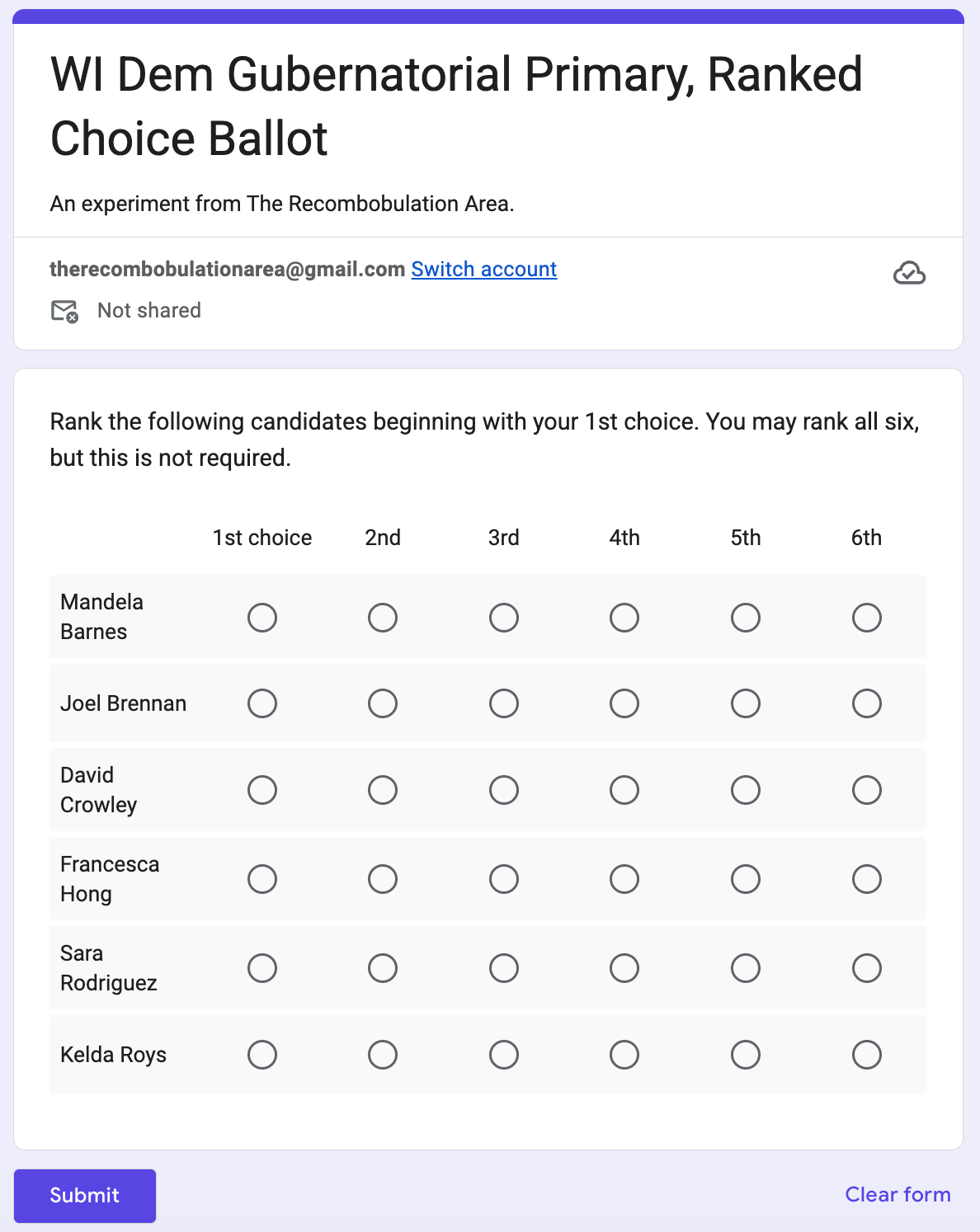
UPDATE, 7/09:
Now, it will look like this:
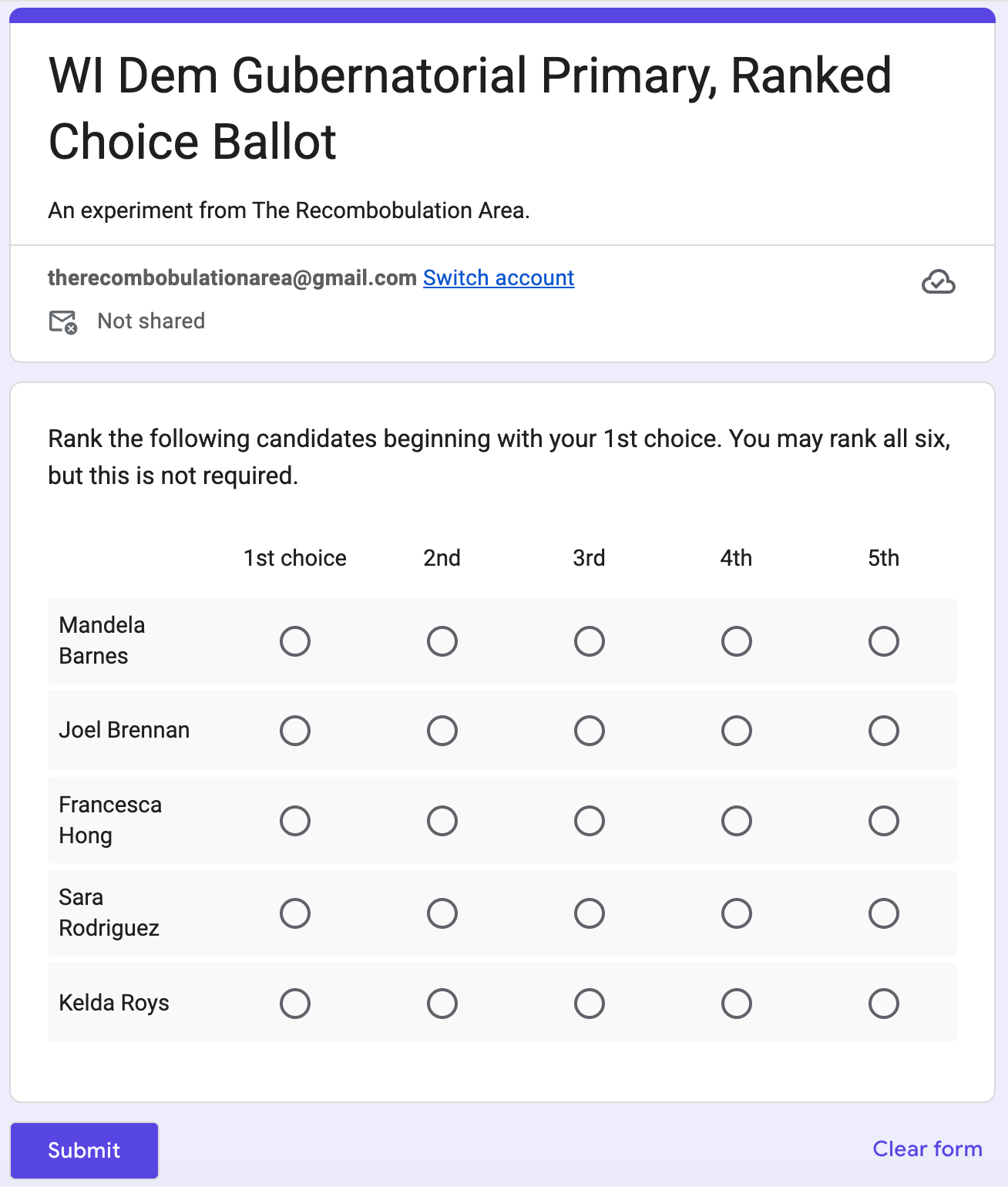
This form — your “ballot” — will be up for a full week, with voting scheduled to close at noon on Tuesday, July 14.
At that point, Johnson and I will break down the data, and will then publish results and analysis of this experiment.
The process will work like this: If a candidate does not win an outright majority of first-preference votes, the candidate with the lowest number of first-preference votes will be eliminated, going to another round of tallying. In that next round, the second-preference votes of the eliminated candidate will be counted as first-preference votes, and on in subsequent rounds until a candidate has more than 50% of the vote and would be declared the winner.
VOTE HERE.
At the link above, you’ll find the ballot for The Wisconsin Democratic Primary Ranked-Choice Voting Experiment.
Please fill this out one (1) time.
We look forward to seeing this experiment unfold.
ICYMI: We shared some news about the state of our publication, and now that we’re back to being 100% independent, we’re offering subscriptions for 50% off.
Details here:


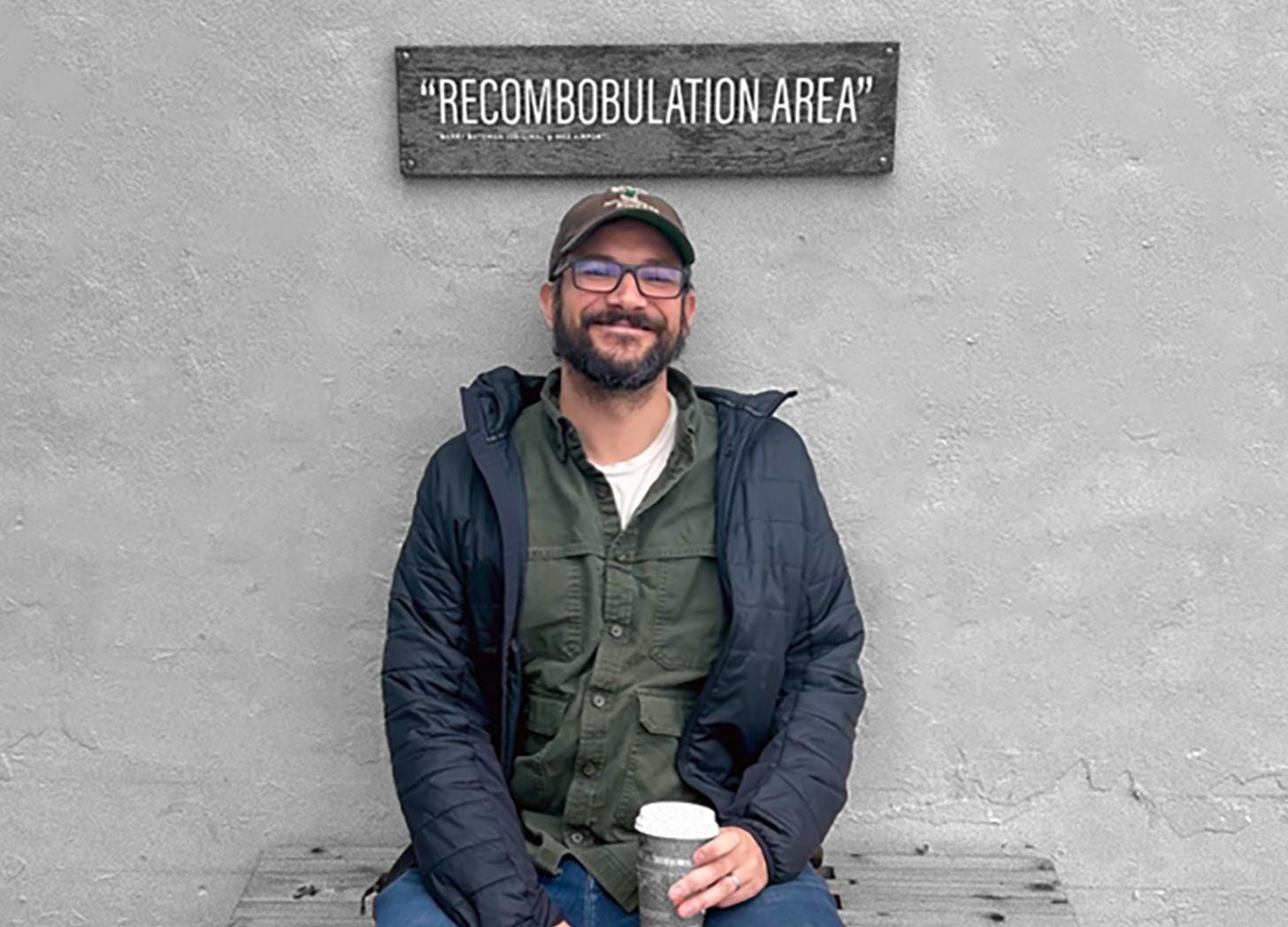
Dan Shafer is a journalist from Milwaukee who writes and publishes The Recombobulation Area. He worked with Civic Media from 2024 to 2026. He’s written for The New York Times, The Daily Beast, Heartland Signal, Belt Magazine, WisPolitics, and Milwaukee Record. He previously worked at Seattle Magazine, Seattle Business Magazine, the Milwaukee Business Journal, Milwaukee Magazine, and BizTimes Milwaukee. He’s won 24 Milwaukee Press Club Excellence in Journalism Awards. He’s on Twitter at @DanRShafer.
Subscribe to The Recombobulation newsletter here and follow us on Facebook and Instagram at @ therecombobulationarea.
Already subscribe? Get a gift subscription for a friend.
Part of a group who might want to subscribe together? Get a group subscription for 30% off!
Follow Dan Shafer on Twitter at @DanRShafer, at BlueSky at @danshafer.bsky.social, and on Threads at @danshafer.
Five, as of July 8
Thanks for doing this; I’m curious to see what the results look like!
This is awesome, thanks!